Avoid This When Foam Rolling

These days, foam rollers are everywhere — the gym, your physical therapist’s office, your living room and even your suitcase. After all, foam rolling has emerged as the darling of the fitness world and the cure-all for many different aches.

Essentially, foam rolling is a form of self-myofascial release, or self-massage, that gets rid of adhesions in your muscles and connective tissue. These adhesions can “create points of weakness or susceptibility in the tissue,” according to Chris Howard, C.S.C.S. and LMT at Cressey Performance. “If the muscle isn’t contracting uniformly from end-to-end, it could lead to injury and pain.” Foam rolling also increases blood flow to your muscles and creates better mobility, helping with recovery and improving performance.

Sounds great, right? Yes, foam rolling offers tremendous potential to relieve pain and help you move better — if used the right way. If not, you risk irritating, and possibly injuring, your body further.

Here’s a breakdown of five common mistakes people often make when using the foam roller.

Mistake #1: You roll directly where you feel pain. When we feel pain, our first inclination is to massage that spot directly. However, this might be a big mistake. “Areas of pain are the victims that result from tension imbalances in other areas of the body,” says Sue Hitzmann, MS, CST, NMT, manual therapist, creator and author of The MELT Method.

Let’s take the IT band, for example. Foam rolling is a commonly prescribed remedy for iliotibial band syndrome (ITBS). While religiously rolling out your IT band might feel good, “the idea that you are going to relax or release the IT band is a misconception,” Hitzmann says. The phrase roll out your IT band itself makes it sound like you are rolling out a piece of dough, but your IT band is anything but pliable. It’s a remarkably strong piece of connective tissue, and research has shown that it cannot be released or manipulated by manual techniques such as foam rolling. “If you iron out areas of inflammation, you can increase inflammation. And if you are in pain, your body will be too stressed to repair itself,” says Hitzmann.

The fix: Go indirect before direct. “If you find a spot that’s sensitive, it’s a cue to ease away from that area by a few inches. Take time and work a more localized region around areas that feel sore before using larger, sweeping motions,” suggests Hitzmann. For the IT band, work on the primary muscles that attach to the IT band first — specifically the gluteus maximus (the largest muscle in the buttocks) and the tensor fasciae latae (a muscle that runs along the outer edge of the hip).

Mistake #2: You roll too fast. While it might feel great to roll back and forth on a foam roller quickly, you’re not actually eliminating any adhesions that way. “You need to give your brain enough time to tell your muscles to relax,” says Monica Vazquez, NASM certified personal trainer and USA Track and Field Running Coach.

The fix: Go slower so that the superficial layers and muscles have time to adapt and manage the compression. Feel where the tender spots are with the roller, and use short, slow rolls over that spot. “There’s no reason to beat up the whole muscle if there are only a few sensitive areas,” Howard says.

Mistake #3: You spend too much time on those knots. We’re often told that if you feel a knot, spend time working that spot with the foam roller. However, some people will spend five to 10 minutes or more on the same area and attempt to place their entire body weight onto the foam roller. If you place sustained pressure on one body part, you might actually hit a nerve or damage the tissue, which can cause bruising, according to Vazquez.

The fix: “Spend 20 seconds on each tender spot then move on,” Vazquez recommends. You can also manage how much body weight you use. For example, when working your IT band, plant the foot of your leg on the floor to take some of the weight off the roller.

Mistake #4: You have bad posture. Wait, what does your posture have to do with foam rolling? A lot. “You have to hold your body in certain positions over the roller,” says Howard, and that requires a lot of strength. “When rolling out the IT band, you are supporting your upper body weight with one arm.” When you roll out the quads, you are essentially holding a plank position. If you don’t pay attention to your form or posture, you may exacerbate pre-existing postural deviations and cause more harm.

The fix: Work with an experienced personal trainer, physical therapist or coach who can show you proper form and technique. Or, consider setting up your smartphone to videotape yourself while foam rolling, suggests Howard. That way, you can see what you are doing right and what you are doing wrong, like sagging in the hips or contorting the spine.

Mistake #5: You use the foam roller on your lower back. “The thing that makes me cringe is when people foam roll their lower back. You should never ever do that,” say Vazquez. Hitzmann agrees. “Your spine will freak out and all the spinal muscles will contract and protect the spine.”

The fix: According to Vazquez, you can use the foam roller on your upper back because the shoulder blades and muscles protect the spine. “Once you hit the end of the rib cage, stop.” If you want to release your lower back, try child’s pose or foam roll the muscles that connect to your lower back — the piriformis (a muscle located deep within the glutes), hip flexors and rectus femoris (one of the main muscles in your quads).

Most importantly, understand what the origin of your pain is before you start. Know what you are trying to achieve through foam rolling and how to do it properly. And don’t forget to stick with it. “To get the benefits of self-massage, it’s repeated exposure that’s most important,” says Howard. “You have to show up and put in the work.”

This article originally appeared on http://www.huffingtonpost.com/2014/03/18/foam-rolling-mistakes_n_4980975.html and was written by Christine Yu


Coping & Self Care

Stress is simply a reaction, either real or imagined, to situations, events or people. We may experience symptoms of anxiety, worry, and withdrawal when we are suffering from stress. We may even start taking actions to escape the stressful feelings.
The most common trigger of stress is some kind of loss – the loss of, or change in a relationship, the loss of another person, or the loss of stability associated with change.

The best way to cope with your feelings is to communicate with another person.

In the meantime, there are other things you can do to help reduce your feelings of stress and emotional pain. We hope this section on coping strategies and dealing with stress will be helpful to you.

Am I stressed?

Signals of stress may include changes in your body, actions, emotions & thinking. Being able to identify these changes may help you better manage your stress:

  • Changes in your body
    • Tension
    • Headache
    • Stomachache
    • Disturbed sleep
    • Appetite changes
    • Fatigue/tiredness
  • Changes in your actions
    • Increased use of alcohol & drugs
    • Withdrawing from others
    • Increased smoking
    • Non-stop talking
    • Short tempered
    • Fidgeting
  • Changes in your emotions
    • Lonely
    • Depression
    • Worried & confused
    • Anger & irritability
    • Feeling blue & sad
    • Hopeless or suicidal
  • Changes in your thinking
    • Trouble concentrating
    • Lost self-confidence
    • Lapses of memory
    • Negative self-talk
    • Negative attitude
    • Poor judgment

Once we are aware that we are stressed, we can start to identify the specific things that may be causing us stress. Sometimes it will be things that we can control like getting some exercise or getting an assignment done.

It is also important to recognize that no one is in control of all the aspects of their lives that can create stress. Some examples of this may be having to move or parents divorcing.


How can I feel less stress?

There are some practical coping strategies you can use to help decrease your level of stress.

Positive Self-talk

To help decrease our stress, we can first learn to change what we say to ourselves – and the way we think about ourselves. This is accomplished by shifting our words and thoughts from what we call ‘negative self-talk’ to ‘positive self-talk’.

The following are a few examples of how we may turn negative comments into positive ones:

  1. Negative: To be a worthwhile person, I have to be good at everything.
    Positive: Just who I am makes me worthwhile.
  2. Negative: Everyone has to like me, or else I’m not okay.
    Positive: I’m okay just the way I am.
  3. Negative: Every problem has to have the perfect solution and if it doesn’t it’s really bad.
    Positive: There are many solutions out there I just have to find the right one.
  4. Negative: People never change.
    Positive: People change.
  5. Negative: I can’t help how I feel & I’m feeling miserable.
    Positive: I can learn to control my feelings.
  6. Negative: I need to worry about everything that could go wrong.
    Positive: I can learn to concentrate on the present moment & relax.

Long Term Stress Management Techniques

Finding ways to increase our health helps us decrease our stress. Simple ways to do this are:

  • Get more adequate sleep
  • Exercise more
  • Eat healthy food
  • Laugh more
  • Apply positive self-talk and positive attitudes
  • Talk to people you trust
  • Work at managing your time
  • Make an effort to relax


Make a Stress Plan

Everyone needs a certain amount of stress in order to get things done, but sometimes it can become too much. When you recognize that you are stressed, you can feel better by using a stress plan like this one:

  1. Identify the stressful situation: What is upsetting you? (School, work, relationships, family, self…)
  2. Identify your signals: How are you feeling about the situation? (What changes in my body, thoughts, emotions & actions do I observe?)
  3. Brainstorm your options: What can you do?
  • CHANGE THE SITUATION: can I say no? can I assert my needs?…
  • CHANGE HOW YOU REACT TO THE SITUATION: exercise, sleep, relax, accept support, make time to have fun, laugh…
  • CHANGE HOW YOU LOOK AT THE SITUATION: use positive self-talk, look for hidden opportunities in negative situations, and look into the future past the problem…


What to avoid: Negative Coping Strategies

Most people, either knowingly or unknowingly, use negative coping strategies to cope with stress. These are strategies that may temporarily provide stress relief, but in the long term may increase the amount of stress we experience. A few examples of these are:

  • Avoidance
    • Procrastination
    • Skipping out
    • Withdrawal
    • Illness
    • Sleep
  • Distractions
    • TV
    • Socializing
    • Video games
    • Shopping
  • Violence
    • Hurting others or yourself
    • Throwing objects
    • Yelling
    • Hitting
  • Chemicals
    • Smoking
    • Sugar & caffeine
    • Drugs & alcohol
    • Medication

Negative coping strategies are our common responses to stress and feelings of being overwhelmed. Everyone uses these sometimes, and (except for violence) that’s ok. However, if you only use negative coping strategies, you can actually end up causing yourself more stress in the long run.

That’s why it’s important to use coping strategies that will give you long term relief from the effects of stress and help you to find solutions to the problems that are causing the stress.

Successfully Coping with Stress

Learning to manage our stress well can improve many aspects of our lives. For example, stress management can give us:

  • Increased ability to deal with problems
  • Increased productivity
  • Stronger relationships
  • Increased energy
  • Improved health
  • Higher self-esteem

These tools and skills will help us to get better at dealing with stress, but there is no such thing as a stress-free life. Part of life is dealing with stress. When you are really stressed out, here are a few more things to think about:

  • You are here. Accept where you are and go from there.
  • Don’t try to please everyone. Leave something for yourself.
  • Stress can be an energizer. Harness that energy and focus on a task.
  • Be active. Look for ways you can start to make some plans, or set some goals for yourself.
  • Laugh. Look for opportunities to laugh – laughter is great therapy.
  • Take charge of yourself. You can’t control other people’s actions.
  • Relax. Create quiet time, meditate, listen to music.
  • Give yourself a break. Pause and do something for yourself.
  • You are not alone. Talk to someone you trust or talk to us at the Crisis Centre.


Facts about Stress

Stress is a normal reaction and a part of life. When we have a large number of stressful events in our lives (good or bad), we can become overwhelmed – and these feelings can create problems.

The following are some statistics on stress that help to illustrate just how stressful stress can be!

  • 25% of youth in BC said a relationship break-up was a big stressor. Other stresses were academic problems, relocation of residence, death of a friend or family member, suicide of a friend or family member, and illness of a friend or family member.
  • 65% of students do not feel rested after a full night’s sleep.
  • Approximately 5% of males and 10% of females said they were emotionally distressed in the past month.
  • Stress related disability claims are estimated to increase by 50% in the next decade.
  • In 1997, Canadians cited stress and mental anxiety as reasons for growing levels of absenteeism more often than physical illness.
  • 40% of Canadians identify worry and anxiety as their principal de-motivators at work and school.
  • In total, the cost of stress in the North American economy is between 150 and 300 billion dollars per year.

This article originally appeared on https://crisiscentre.bc.ca/coping-and-self-care/

Acupressure Regions to Ease Migraine and Headaches

Headaches and migraines are two of the most common pains that people suffer form and although a headache may be mild or throbbing and last a few hours a migraine is a more serious condition where the pain may even last for days. In most cases common headache is caused by excessive stress, tension and emotional changes. But migraine is a more complex situation where the blood vessels of the brain enlarge to release chemicals from the nerve fibers that cause inflammation and hence the severe pain.


Causes of Migraine:

Although the precise cause of migraine in not yet known but there are certain specific triggers of migraines and the first and most powerful one is:

  • Hormonal Change– That’s the reason two-third of women experience extreme headaches during the time or just before the onset of periods. Migraines become more common after the onset of puberty and gradually decrease after menopause.
  • Eating Habits– Yet another major trigger of migraine is the food we eat. Most common triggers of migraine are alcohol, tobacco, caffeine and fermented foods.
  • Other Causes– Stress, tension, work pressure, sleeping disorders and changed atmospheric pressure may also lead to severe headache and nausea.


Acupressure to Heal Migraine:

The benefits and helpful aspects of Reflexology are numerous and it can be used effectively for treating pains and aliments. A majority of the pains and irritations above the neck are caused by excess muscle tension and vascular imbalance and therefore can be healed effectively through acupressure and reflexology because the acupressure points in this area are easily accessible and can be triggered with very little pressure. While over the counter medicines can provide instant relief but in most cases it is a temporary one, but reflexology not only treats the problems externally but heals the ailment from within so that you can get over it completely.


6 Most Important Regions to Relieve Migraine and Headaches:

Applying pressure in these 5 specific regions of the body helps in clearing the blocked meridians so that energy may flow freely throughout the body releasing endorphins, the natural pain killer that our body produces.

Forehead Region:

All the points on the face and forehead are yang pints that are full of energy that generate from the head and face and flow downwards.

Third Eye Point– This point is located just between the two eyebrows where the bridge of the nose meets the forehead. Applying pressure on this region helps in improving concentration, reliving eye strain, headaches,  and ulcer pains. Apply pressure for 1 minute and then move to the next point.


Bright Light– This point is situated in the inner corner of the eyes just below the eyebrows. Applying pressure at these points works excellent in relieving sinus headaches and allergy symptoms. In addition, it also helps in improving vision. Apply pressure for 1 minute on both sides.


Temple Region:

In the temple region there are a chain of points that curl around the ear starting from the top of the ear and are situated just one finger width from the ear. All these points have to be worked simultaneously for effective results. Here we have numbered the pints as 1, 2, 3, 4 and 5 so that the points can be located in the image with ease. Point 1 is located near the tip of the ear and the rest of the points curl around the ear.

  • Hairline Curve (1)
  • Valley Lead (2)
  • Celestial Hub (3)
  • Floating White (4)
  • Head Portal Yin (5)


Applying pressure on these points helps in relieving temporal headaches on the sides of the head and migraines.

Face Region:

Welcome Fragrance-This points are located both sides of the nostril. Applying pressure on these points helps in opening sinuses and reducing tension headaches.


Neck Region:

Wind Pool– This point is located at the back of the head, halfway between your ear and spine; between the two muscles that come together. Applying pressure at Wind Pool helps in unblocking nasal congestion, relieving  pain in eyes, ears, throat, headaches and migraines.


Shoulder Well– This point is located at the edge of the Shoulder halfway between the point of your shoulder and the base of your neck. Applying pressure on this point helps in reducing stiffness of neck and shoulders and relieving neck pain. It also helps in relieving other ailments like asthma and spasms.


Heaven’s Pillar– This point is located 2 fingers below the base of the skull on the rope like muscles present on both sides of the spine. Applying pressure on this point helps in relieving aches at the back of the head, neck pains, eyestrain, stress, insomnia and stiff neck. Stimulating the Heaven’s Pillar also helps in cough relief.


Hands:

Union Valley– This point is located in the web between you thumb and index finger. Applying pressure on this point helps in relieving back pain, frontal headaches, tooth ache and releasing tension from neck and head.


Foot:

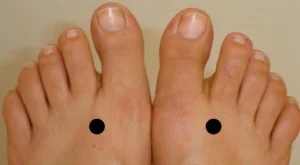
Moving Between– This point is located in the valley between the big and the second toe. Applying pressure on this point helps in relieving headaches, tiredness of eye, arthritis and foot cramps.


Headaches may be a common problem but that does not mean it should be neglected. But instead of resorting to medicine and pills, know the reflexology zones and give reflexology and acupressure a chance to see the difference. Experiment with the pressure points you have chosen because specific pressure points work more effectively for specific type of headaches and some points might show strong results while others might take more time. Therefore try out each of the pressure points to know which points work best for you.


This article originally appeared on http://www.modernreflexology.com/6-effective-acupressure-regions-to-treat-migraine-headaches/ and was written by Bipasha Mukherjee

How Massage Therapy Helps Relieve Osteoarthritis Pain

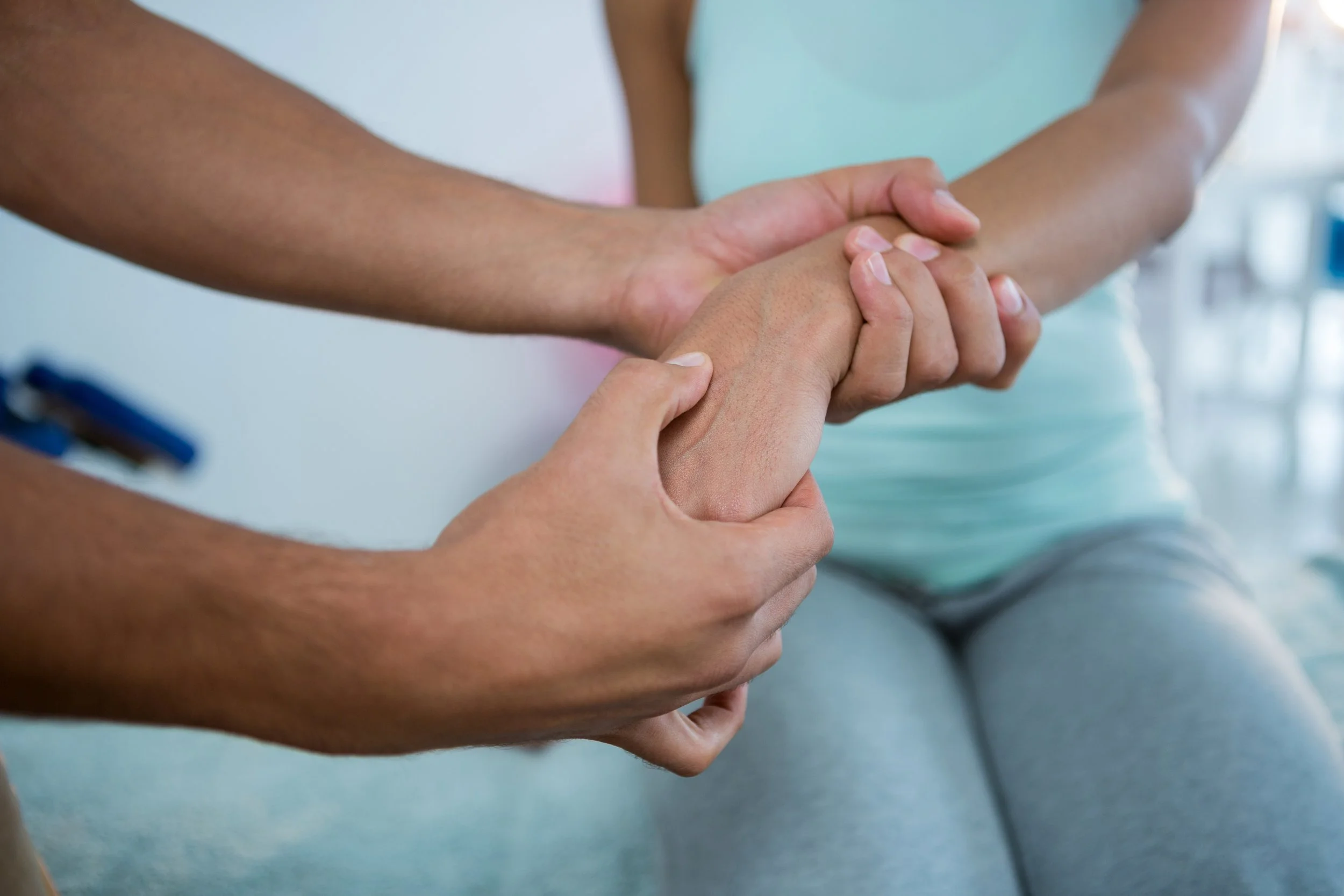
Massage has become one of the most commonly used complementary health approaches in the United States: More than 15 million American adults have received it, according to the National Institutes of Health. It's also a treatment that might benefit people with osteoarthritis

"When done by a trained massage therapist on carefully selected patients, massage therapy is a very valuable addition to traditional osteoarthritis treatments," says Valerie Voner, a licensed massage therapist and coordinator of the massage therapy program at Cape Cod Community College in West Barnstable, Massachusetts. 

Osteoarthritis, which affects nearly 27 million Americans, occurs when wear and tear breaks down the cartilage cushions between the joints. Pain and stiffness often result, according the Centers for Disease Control and Prevention

Chronic osteoarthritis responds well to massage, Voner says. Pain is relieved as the muscles surrounding the joints relax, releasing stiffness and allowing for better range of motion and mobility. Increased relaxation, decreased stress, and a sense of well-being are additional benefits of massage therapy, she explains. 


The Science Behind Massage Therapy 

"It's hard to find good research on massage therapy for osteoarthritis because there have been few controlled studies," Voner says. "It's hard to measure relaxation and well-being objectively." 

Still, some small studies have shown that massage therapy can be effective for various arthritis-related pains: 

Low back pain. Massage therapy may be useful for low-back pain, at least in the short term, according to a 2013 review of studies in the International Journal of General Medicine

Neck pain. A study of 37 people with arthritic neck pain, published in 2014 in Complementary Therapies in Clinical Practice, found that massage therapy helped relieve pain and increased range of motion. 

Knee pain. A study involving 68 people that looked specifically at massage therapy for knee osteoarthritis concluded that it was both safe and effective. The researchers' follow-up study, published in 2012 in PLoS One, found that the optimal treatment for relief is 60 minutes of Swedish massage once a week. Compared with standard care, the addition of massage reduced pain and improved function. And a study in the August 2015 Journal of Traditional Chinese Medicine also found that Chinese massage therapy can bring short-term relief from osteoarthritis knee pain

Although there is no solid evidence to explain how or why massage therapy works, experts believe it increases blood flow, blocks pain signals that go to the brain, and releases stress-reducing chemicals like serotonin or endorphins. 

Therapeutic Approaches for Osteoarthritis Treatment 

According to the Arthritis Foundation, massage offers a range of potential benefits to people with arthritis. Types of massage include: 

  • Trigger point. This type of massage relieves pain in specific areas of the body by applying pressure or vibration at trigger points, the Arthritis Foundation explains. Self-massage is often based on trigger points.
  • Reiki. Based on the Eastern belief that energy can be used to heal, Reiki is a form of massage in which the practitioner guides energy through your body to stimulate healing. The massage therapist's hands hover over or very lightly touch your body. Though the therapy appears to be safe, research hasn't yet shown how effective the treatment is, according to the National Center for Complementary and Integrative Health.  
  • Shiatsu. This Japanese massage technique uses continuous, rhythmic motions of the fingers and palms to apply pressure to particular points of the body. It's thought that Shiatsu restores the flow of healthy energy. (This type of massage is a good option for someone who does not want to disrobe for a massage, as it’s done fully clothed.)
  • Swedish. A massage therapist uses long strokes, circular movements of applied pressure, and kneading to help relax muscles, reduce soreness, and increase oxygen flow.  
  • Reflexology. The theory behind reflexology is that applying pressure to specific spots on the hands and feet brings relief to other parts of the body. This may be beneficial for people who are too tender for direct touch on other parts of the body.           

How to Personalize Your Massage Plan 

Dina Gilmore, a licensed massage therapist in the Denver area, has dealt with bone and joint pain for most of her life. When she was younger, she says, doctors dismissed her concerns as growing pains and attributed them to the fact that she was an athlete. She was diagnosed with osteoarthritis in 2012 when X-rays after an injury showed she had degenerative bone disease. 

Gilmore considers massage to be an important part of her OA management plan. “It helps to control the symptoms,” she says. “Massage helps to decrease the pain after the work that I do all day.” Gilmore became a massage therapist because she wanted to help ease the pain for others. “I learned how good it feels to make someone feel better,” she says. 

“The type of massage that I’ve benefited greatly from has been lymphatic drainage, which is a very light touch massage that works with the lymphatic system," she says. "When you get that flowing, it communicates with your central nervous system, which can calm a lot of the pain that flares up with OA. Also Swedish massage, which is just a basic massage, and any energy work like Reiki or Polarity are fantastic.” 

Gilmore recommends trying different types of massage until you find one that provides relief. No two bodies are the same, she says, so it may take some trial and error. She also says it’s important to tell your massage therapists that you have arthritis and to let them know when something feels good and when it doesn’t. 

If you’re nervous about going for a massage, call ahead and ask the therapist to walk you through the process and answer any questions you may have. If you don’t want to lie on a table, ask for a chair massage. If you’re uncomfortable with undressing for a massage, you can request to remain fully or partially clothed. “It’s your session,” Gilmore says. “It should be customized to meet your needs.” 

Tips for Finding Affordable Massages 

Adding a weekly massage to the budget may not seem possible when you have other priorities. Try these ideas for lessening the cost burden:

  • Ask for a package deal. Many massage therapists offer discounts when they know they will be seeing a client on a regular basis, Gilmore says.
  • Request a massage gift card when a loved one asks for gift ideas you’d enjoy.
  • Check out deals on social media sites like Groupon or LivingSocial. Many massage therapists offer significant discounts to build their client base.
  • Purchase a membership at a franchise massage location. Usually you'll pay for a set number of massages a month and get a discount on additional visits.

Other points to keep in mind: 

  • Not all massage therapists are trained in pain management.
  • Massage therapy is not a substitute for medical treatment. Always tell your doctor if you are using any complementary or alternative osteoarthritis treatment.
  • Not everyone is a good candidate for every type of massage. For instance, deep tissue massage isn't appropriate for someone who has bleeding problems or is on blood thinners or when someone is having an OA flare, Voner says. 

Additional reporting by Mikel Theobald.

Article originally appeared on http://www.everydayhealth.com/osteoarthritis/massage-therapy-for-osteoarthritis.aspx