
It's Official: Yoga Helps Depression

Evidence keeps stacking up that yoga is a boon for both physical and mental health conditions. Now, a small new study from Boston University finds that taking yoga classes twice a week may help ease depression, thanks in part to deep breathing.

The study, which was published in the Journal of Alternative and Complementary Medicine, included 30 people from ages 18 to 64 with clinical depression, who either were not taking antidepressants or had been on a steady dose for at least three months. Half of the participants were assigned to take a 90-minute Iyengar yoga class three times per week, as well as four 30-minute sessions at home each week. People in the other group took two group classes and three at-home sessions every week.

A small new study from Boston University finds that taking yoga classes twice a week may help ease depression, thanks in part to deep breathing

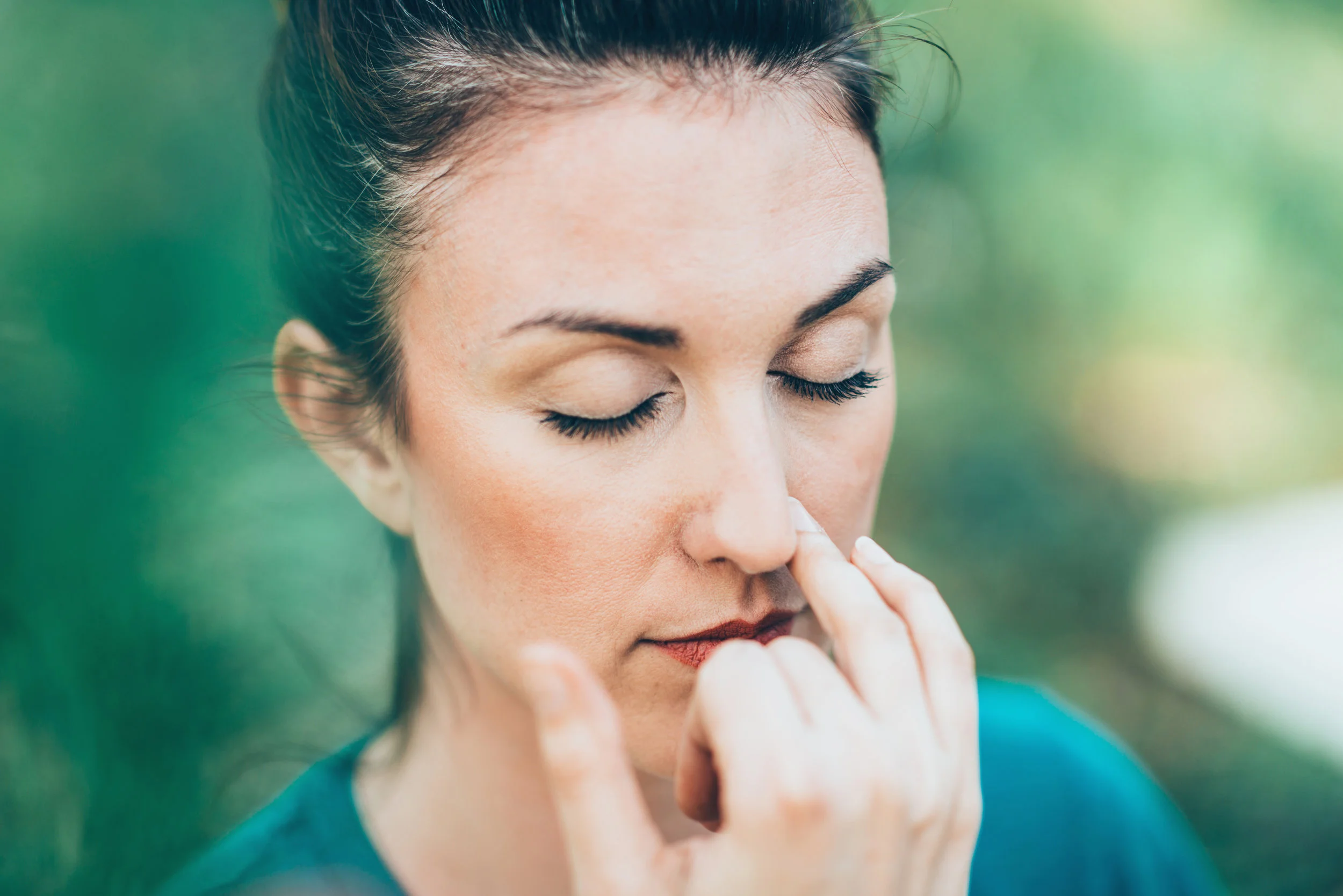
Iyengar yoga classes emphasize alignment, precise postures and controlled breathing. The classes taught in the study also included 20 minutes of slow, gentle breathing, at a rate of five inhales exhales through the nose per minute.

After about three months, most of the people in both groups had lowered their scores on a depression-screening questionnaire by at least 50%. Not surprisingly, more yoga was better; those who took three classes per week had lower depression scores than those who took two per week.

But since many participants mentioned that the larger time commitment was challenging, the researchers actually recommend two classes per week, saying that the regimen still comes with meaningful benefits.

That yoga seems to be effective is good news for people struggling with depression. Lead author Dr. Chris Streeter, associate professor of psychiatry and neurology at Boston University School of Medicine, says that the practice has far fewer side effects and potential drug interactions than mood-altering medications. The most common complaint reported in the study was a small one—temporary muscle soreness—and one participant experienced distressing thoughts while practicing breathing exercises at home.

Some people who haven't responded to traditional treatments might do well with yoga, because unlike antidepressant drugs, yoga and deep breathing target the autonomic nervous system, Streeter says. “If your autonomic nervous system is balanced out, then the rest of the brain works better,” she says. Research shows that 40% of people on antidepressants do not recover fully from depression, says Streeter, which puts them at increased risk for a relapse. “Getting that 40% all the way better is a really important goal. Instead of adding another drug, I would argue that yoga is another thing you can add to the treatment regimen that might help.”

More research is needed to determine how yoga stacks up against other treatments. (A larger trial comparing yoga to walking is underway, the study notes.)

While Iyengar yoga is generally considered to be a safe practice for people of all levels, it's not the only type with health benefits, Streeter adds. “It depends on who the person is and what they’re looking for,” she says. For now, what's clear is that the type with the most health benefits will be whichever kind you stick with.

This article originally appeared on time.com and was written by Amanda MacMillan

What's the Point of Cartilage?

Cartilage is a resilient and smooth elastic tissue, rubber-like padding that covers and protects the ends of long bones at the joints, and is a structural component of the rib cage, the ear, the nose, the bronchial tubes, the intervertebral discs, and many other body components. It is not as hard and rigid as bone, but it is stiffer and less flexible than muscle.

Because of its rigidity, cartilage often serves the purpose of holding tubes open in the body. Examples include the rings of the trachea, such as the cricoid cartilage and carina, the torus tubarius at the opening of the pharyngotympanic/auditory tube, the ala of the nostrils, and the auricle/pinna of the ear.

Cartilage is composed of specialized cells called chondrocytes that produce a large amount of collagenous extracellular matrix, abundant ground substance that is rich in proteoglycan and elastin fibers. Cartilage is classified in three types, elastic cartilagehyaline cartilage and fibrocartilage, which differ in relative amounts of collagen and proteoglycan.[1]

Cartilage does not contain blood vessels (it is avascular) or nerves (it is aneural). Nutrition is supplied to the chondrocytes by diffusion. The compression of the articular cartilage or flexion of the elastic cartilage generates fluid flow, which assists diffusion of nutrients to the chondrocytes. Compared to other connective tissues, cartilage has a very slow turnover of its extracellular matrix and does not repair.

This article originally appeared on wikipedia.org. Read more here.

In other news, the future is here: Repairing articular cartilage defects with an injectable gel engineered with gene modified BMSCs

What a Single Yoga Pose a Day Could Do

A single yoga pose each day may improve spine curvature for scoliosis patients

A new study claims performing a single yoga pose for 90 seconds for at least 3 days a week could reduce spine curvature in patients with scoliosis in as little as 3 months.

Patients with scoliosis who did the side plank yoga pose for 90 seconds a day saw significant improvement in spine curvature.

The researchers, including Dr. Loren Fishman of the Columbia University College of Physicians and Surgeons in New York, NY, publish their findings in the journal Global Advances in Health and Medicine.

Scoliosis - a condition in which the spine curves to the side - affects around 6 million people in the US and is accountable for more than 600,000 doctor visits each year. Although scoliosis can affect all age groups, onset is most common between the ages of 10-15.

Severe scoliosis - defined as a spine curvature of more than 45 degrees - is usually treated with surgery. There are non-surgery techniques available for patients with spine curvatures less than 45 degrees - one of the most common being bracing.

Each year, around 30,000 children and adolescents with scoliosis are fitted with a brace that is worn for around 23 hours a day, helping to straighten the childen's spines as they grow.

The researchers note that a popular bracing method - most commonly used in adolescent girls - requires patients to attend 40 2-hour sessions, three times a week for 3-4 months. The patients are then urged to carry out lifelong exercises for 30 minutes a day.

"Since many scoliosis patients are adolescent girls, the unwieldy bracing and lengthy exercising is socially awkward, emotionally painful and physically difficult," says Dr. Fishman. "And yet untreated scoliosis can progress at 7% per year, and result in disability and life-threatening health risks."

Patients required to perform the side plank on weaker side of spine

In their study, Dr. Fishman and colleagues set out to determine the effectiveness of one basic yogapose - known as the side plank - on 25 participants aged 14-85 with idiopathic scoliosis.

The side plank involves lying on one side of the body with straight knees, and propping up the upper body with the elbow and forearm.

After undergoing an initial examination, an X-ray and an evaluation by a radiologist, patients were shown how to carry out the yoga pose.

In the first week, they were instructed to do the pose on the side their spine was curved toward for 10-20 seconds each day. They were then asked to do the pose once daily for as long as possible, still on the side of their spine curvature.

Explaining the reasons behind asking the patients to do the pose on the side of their curvature, Dr. Fishman says:

"Since scoliosis is an asymmetrical condition, I have treated it asymmetrically, asking patients to do the pose on the weaker side only. That strengthens the specific spinal muscles on the convex side that are needed to help with curve reduction."

He adds that the National Scoliosis Foundation recommend that individuals with scoliosis perform 25 yoga poses to help with their spine curvature. However, he points out that no clinical results support the effectiveness of this, and patients are not advised to perform these poses asymmetrically.

Patients' spine curvatures were measured at the beginning and end of the study using the standard Cobb angle technique, and X-rays were taken again once the study ceased.

Yoga pose improved spine curvature by around 32% among all patients

On average, participants did the side plank pose for 1.5 minutes a day, 6.1 days a week for 6.8 months.

The researchers found that spine curvature improved by around 32% over all patients. Among 19 patients who did the yoga pose for at least 3 days a week, spine curvature improved by 40.9%. Of these patients, adolescents saw a 49.6% improvement in curvature, while adults saw a 38.4% improvement.

Commenting on the findings, the researchers say:

"Asymmetrically strengthening the convex side of the primary curve with daily practice of the side plank pose held for as long as possible for an average of 6.8 months significantly reduced the angle of primary scoliotic curves. These results warrant further testing."

Numerous studies have hailed the benefits of yoga for other health problems. Earlier this year, Medical News Today reported on a study that suggested yoga could reduce the risk of anxiety and depression in expectant mothers, while a 2013 study claimed yoga could help lower blood pressure.

This article originally appeared on medicalnewstoday.com and was written by Honor Whiteman

Myopathy: Dysfunction of Muscle Fiber

The myopathies are neuromuscular disorders in which the primary symptom is muscle weakness due to dysfunction of muscle fiber. Other symptoms of myopathy can include include muscle cramps, stiffness, and spasm. Myopathies can be inherited (such as the muscular dystrophies) or acquired (such as common muscle cramps). Myopathies are grouped as follows:
congenital myopathies: characterized by developmental delays in motor skills; skeletal and facial abnormalities are occasionally evident at birth
muscular dystrophies: characterized by progressive weakness in voluntary muscles; sometimes evident at birth
mitochondrial myopathies: caused by genetic abnormalities in mitochondria, cellular structures that control energy; include Kearns-Sayre syndrome, MELAS and MERRF
glycogen storage diseases of muscle: caused by mutations in genes controlling enzymes that metabolize glycogen and glucose (blood sugar); include Pompe's, Andersen's and Cori's diseases
myoglobinurias: caused by disorders in the metabolism of a fuel (myoglobin) necessary for muscle work; include McArdle, Tarui, and DiMauro diseases
dermatomyositis: an inflammatory myopathy of skin and muscle
myositis ossificans: characterized by bone growing in muscle tissue
familial periodic paralysis: characterized by episodes of weakness in the arms and legs
polymyositis, inclusion body myositis, and related myopathies: inflammatory myopathies of skeletal muscle
neuromyotonia: characterized by alternating episodes of twitching and stiffness; and
stiff-man syndrome:  characterized by episodes of rigidity and reflex spasms
common muscle cramps and stiffness, and
tetany:  characterized by prolonged spasms of the arms and legs

Treatments for the myopathies depend on the disease or condition and specific causes. Supportive and symptomatic treatment may be the only treatment available or necessary for some disorders. Treatment for other disorders may include drug therapy, such as immunosuppressives, physical therapy, bracing to support weakened muscles, and surgery.

Having a healthcare team enables you to understand your symptoms. Visit your physician for a diagnosis and recommendation of treatments.

See the original post and find out more about myopathy and resources for support here.