

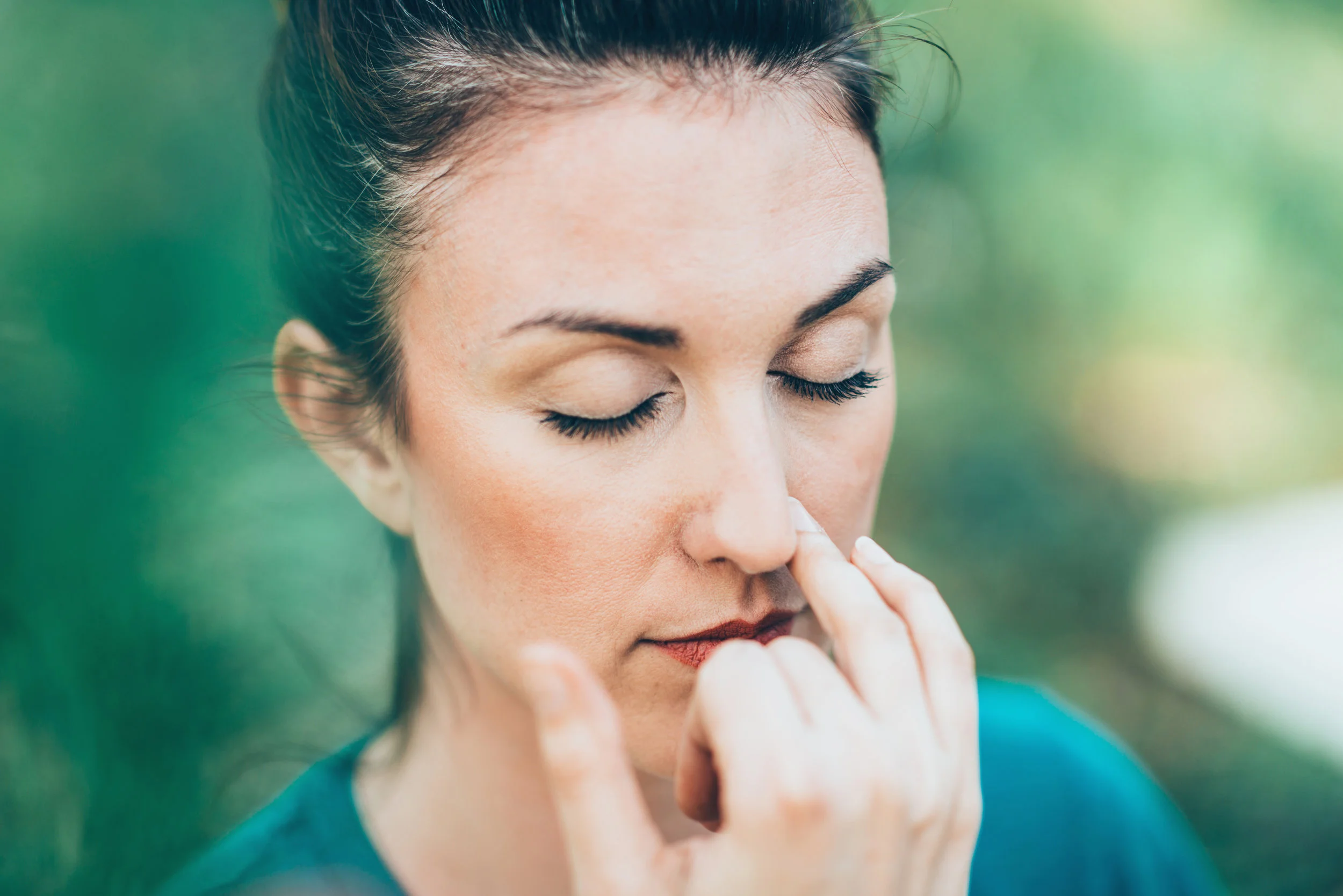
Acupuncture For Relieving Hot Flashes

As menopause approaches, approximately 85 percent of U.S. women experience hot flashes and up to 50 percent of them continue having them for several years.(1) The sudden flushing of the skin that often leads to sweating, and/or feeling very warm and sometimes, chilled, is a frustration that many women seek to find relief from.

Acupuncture helps provide relief from hot flashes

Acupuncture has been suggested as a way to help ease hot flashes, but now, a new study conducted by The North American Menopause Society (NAMS) reinforces its effectiveness.(2) Researchers assessed hundreds of other past menopause-related studies, looking at ones where acupuncture played a role in providing women with relief from hot flashes. They also studied women ages 40-60 who were currently experiencing menopause, observing them as they tried a variety of acupuncture techniques, ranging from traditional Chinese medicine acupuncture (TCMA), ear acupuncture, electroacupuncture, laser acupuncture and acupressure.(2)

They concluded " . . . that acupuncture positively impacted both the frequency and severity of hot flashes."(2) NAMS executive director Margery Gass, MD., says that "The review suggests that acupuncture may be an effective alternative for reducing hot flashes, especially for those women seeking non-pharmacologic therapies."(2)

It's thought that acupuncture may be helpful because it helps to reduce endorphins in the part of the brain that affects thermoreguation, which is related to core body temperature.(2)

The Mayo Clinic is on board with acupuncture as an alternative way to help manage hot flashes. In fact, according to the clinic, acupuncture, along with relaxation practices such as yoga and hypnosis, may be beneficial for women, as is maintaining a healthy weight and avoiding spicy foods.(3)
 

Foods that help minimize hot flashes

Foods that can help naturally fight hot flashes include drinking herbal teas like chamomile, eating nuts, and enjoying potassium-boosting vegetables such as broccoli and cauliflower.(4)

Avoidance of alcohol and caffeine is also important as they can elevate the intensity and duration of hot flashes.

Sources for this article include:

(1) http://www.breastcancer.org/tips/menopausal/facing/hot_flashes

(2) http://www.sciencedaily.com/releases/2014/07/140714122812.htm

(3) http://www.mayoclinic.org

(4) http://www.naturalnews.com/044700_hot_flash_relief_menopause_diet.html


This article originally appeared on naturalnews.com and was written by Antonia.

Cervicogenic Headache: Neck Headache

Neck Headache, or as it is known medically - Cervicogenic Headache, is a secondary headache disorder. In other words, your headache is caused by a neck joint problem.

The good news is that by fixing your neck problem, your neck headache can be alleviated. Researchers feel that neck headache accounts for between 4% to 22% of all headaches seen clinically. (Racicki et al 2013; Watson 2014)

What's Causes Your Neck Headache?

Your neck headache can originate from a variety of musculoskeletal and neurovascular structures in your upper neck; including the upper three neck joints, C2/3 disc, spinal cord coverings and neck muscles. A dysfunction in these areas can trigger pain signals that travel to your trigeminocervical nucleus (TCN) in your brainstem. This information is then transmitted into your brain and interpreted as a headache (Bogduk 2003).

Upper Neck Joints

The most likely sources of your neck headache is dysfunction of either your upper neck joints, neck muscles or nerves, which trigger pain signals that travel to your trigeminal nucleus in your brainstem, where you interpret the pain signals as a neck headache.

The most common cause of neck headache is dysfunction of your upper three neck joints. The most common neck joints involved are your:

  • Atlanto-occipital joint (O-C1), 
  • Atlanto-axial joint (C1/2), and 
  • C2/3 cervical spine joints.
Trigeminocervical Nucleus.jpg


In simple terms, your neck joints can cause a neck headache or pain if they are either too stiffor move too much (eg wobbly and unsupported by weak muscles) or are locked in an abnormal joint position eg. locked facet joint or poor posture. 

Once your neck joint becomes stressed and painful, the pain signals are referred to the trigeminocervical nucleus in your brainstem... and you start to feel a neck headache or, in some cases, face pain!

neck_headache_3.png


Your physiotherapist is expert in the assessment and correction of neck joint dysfunctions that result in neck headache. Their professional diagnosis and treatment is essential for neck headache sufferers.

Neck Muscles

Your neck and shoulder blade muscles that originate from your neck will cause pain if they are overworking, knotted or in spasm. 

Some of your neck muscles overwork when protecting injured neck joints. Other neck muscles become weak with disuse, which places further demand on your overworking muscles resulting in muscle fatigue related symptoms. 

Your neck muscles work optimally when they have normal resting tension, length, strength, power and endurance.

Your physiotherapist is expert in the assessment and correction of muscle imbalances that result in neck headache.

neck_headache_5.jpg


Cervical and Occipital Nerves

Nerves in your upper neck may be directly pinched by extra bony growths eg arthritis, disc bulges or swelling. The results can result in nerve irritation or a reduction in neural motion known as neuromechanosensitivity or abnormal neurodynamics

Irritation of your upper neck structures refer pain messages along the nerves and cause your headache.

In simple terms, your neck is the "switch", nerves are the "power cords" and your headache is where the "light" comes on.


What are the Symptoms of Neck Headache?

Neck headaches can often be misdiagnosed or confused with other sources of headache, including migraine, since the head pain is typically felt in the same area as a migraine. 

It is really the interpretation from your headache physiotherapist of the whole combination of your symptoms plus the findings of your physical examination that will confirm a neck headache diagnosis

Commonly, neck headache sufferers will usually notice:

  • Tenderness at the top of their neck and base of the skull. 
  • Neck stiffness or a mild loss of movement, although this is sometimes is only subtle and needs to be confirmed during your physiotherapist's physical examination.

One of the main differences between neck headache and migraine is that physiotherapy treatment of your neck is able to alter or relieve your headache immediately.

Common Characteristics of a Neck Headache?

The following symptoms are characteristics of a neck headache. You may experience any one or several of these symptoms:

  • Your headache may seem to radiate from the back to the front of your head.
  • Your headache is provoked or eased by a neck movement, a sustained posture, stomach sleeping or with your head turned to one side.
  • Your headache normally appears to be worse on one side of your head. The side is normally constant and does not swap sides.
  • Your headache appears to temporarily ease up when you apply pressure or you massage your neck or the base of your skull.

If you experience any of the above symptoms, you are more likely than not to be suffering a neck headache. Please inform your physiotherapist and they will assist you.

What if Your Neck Isn’t Sore?

Even if your neck isn’t sore or painful, you can still experience neck headaches. It is important to remember that your neck joints may NOT be sore at REST, but they may be tender to touch or painful on movement. 

Neck joints that are sore at rest will normally be very tender to touch and painful at the extreme of movement. Obviously, this scenario is a more severe neck headache.

If your headache or a migraine has been present for years and your neck has not been examined, then a thorough neck examination is recommended and is appropriate to eitherconfirm and treat your neck headache or exclude a neck disorder as the cause of your headache.

How is a Neck Headache Diagnosed?

Accurate diagnosis is important to guide the correct treatment and management your neck headache. Headache and head pain can have many causes, not just neck headache or migraine. Correctly identifying the cause will lead to better treatment.


This article originally appeared p physioworks.com.au and was written by John Miller.

Photo by Jacob Morrison on Unsplash

Depression is a physical illness which could be treated with anti-inflammatory drugs, scientists suggest

Depression could be treated using anti-inflammatory drugs, scientists now believe, after determining that it is a physical illness caused by a faulty immune system.

Around one in 13 people in Britain suffers from anxiety or depression and last year the NHS issued 64.7 million prescriptions for antidepressants, double the amount given out a decade ago.

Current treatment is largely centred around restoring mood-boosting chemicals in the brain, such as serotonin, but experts now think an overactive immune system triggers inflammation throughout the entire body, sparking feelings of hopelessness, unhappiness and fatigue. 

It may be a symptom of the immune system failing to switch off after a trauma or illness, and is a similar to the low mood people often experience when they are fighting a virus, like flu.

A raft of recent papers, and unexpected results from clinical trials, have shown that treating inflammation seems to alleviate depression.

Likewise when doctors give drugs to boost the immune system to fight illness it is often accompanied by depressive mood - in the same way as how many people feel down after a vaccination.

Professor Ed Bullmore, Head of the Department of Psychiatry at the University of Cambridge, believes a new field of ‘immuno-neurology’ is on the horizon.

“It’s pretty clear that inflammation can cause depression,” he told a briefing in London to coincide with this week’s Academy of Medical Sciences FORUM annual lecture which has brought together government the NHS and academics to discuss the issue.

“In relation to mood, beyond reasonable doubt, there is a very robust association between inflammation and depressive symptoms.  We give people a vaccination and they will become depressed. Vaccine clinics could always predict it, but they could never explain it.

“The question is does the inflammation drive the depression or vice versa or is it just a coincidence?

“In experimental medicine studies if you treat a healthy individual with an inflammatory drug, like interferon, a substantial percentage of those people will become depressed. So we think there is good enough evidence for a causal effect.”

Scientists at Cambridge and the Wellcome Trust are hoping to begin trials next year to test whether anti-inflammatory drugs could switch off depression.

“There is evidence to suggest it should work,” added Prof Bullmore.

The immune system triggers an inflammatory response when it feels it is under threat, sparking wide-ranging changes in the body such as increasing red blood cells, in anticipation that it may need to heal a wound soon.

Scientists believe that associated depression may have brought an evolutionary benefit to our ancestors. If an ill or wounded tribal member became depressed and withdrawn it would prevent a disease being passed on.

However a link has taken so long to establish because until recently scientists believed the brain was entirely cut off from the immune system, trapped behind a ‘Berlin Wall’ known as the blood brain barrier.

But recent studies have shown that nerve cells in the brain are linked to immune function and one can have an impact on the other. Around 60 per cent of people referred to cardiologists with chest pain do not have a heart problem but are suffering from anxiety.

One in 13 people in Britain suffers from depression CREDIT: ANNA GOWTHORPE 

Figures also show that around 30 per cent of people suffering from inflammatory diseases such as rheumatoid arthritis are depressed - more than four times higher than the normal population.

Likewise people who are depressed after a heart attack are much more likely to suffer a second one, while the lifespan for people withcancer is hugely reduced for people with mental illness.

“You can’t separate the mind from the body,” said Prof Sir Robert Lechler, President of the Academy of Medical Sciences.

“The immune system does produce behaviour. You’re not just a little bit miserable if you’ve got a long term condition, there is a real mechanistic connection between the mind, the nervous system and the immune system.

“Our model of healthcare is outdated. We have a separation. Mental healthcare is delivered by mental health professionals, psychiatrists, mental health nurses and so on, often in separate premises from where physical health care is delivered and that is simply wrong and we need to find ways to ever more closely integrate and train amphibious healthcare professionals who can straddle this divide.”

Research has also shown that people who have suffered severe emotional trauma in their past have inflammatory markers in their body, suggesting their immune system is constantly firing, as if always on guard against abuse.

This article originally appeared on www.telegraph.co.uk and was written by Sarah Knapton.

Photo by: Photo by Nik Shuliahin on Unsplash

What is Sacroiliac Joint Pain?

SI Joint Pain

Your Sacroiliac Joints (SIJ) are a critical linkage system between your lower spine and pelvis. The sacrum (tailbone) connects on the right and left sides of the ilia (pelvic bones) to form your sacroiliac joints.

Your sacroiliac joints should be a fairly stiff or rigid link between the pelvic bones, and allow only a few degrees of movement. In some people due to trauma or just extra mobility, your sacroiliac joints have too much uncontrolled motion. This allows your sacroiliac joints to adopt an abnormal or stressed joint position, which may result in SIJ pain. 

When your sacroiliac joints are not moving normally due to either stiffness or excessive movement, it is referred to as Sacroiliac Joint Dysfunction, which normally results in sacroiliac pain.

It is vital that you have both normal SIJ movement and muscle control around this area to avoid SIJ pain and injury. 

Commonly sacroiliac dysfunction can cause lower back, hip, buttock and sciatic pain.

What Causes Sacroiliac Joint Pain?

There are two main groups of sacroiliac dysfunction that cause SIJ pain:

  1. Hypermobility / Instability 
  2. Hypomobility / Stiffness

Hypermobility issues are the most common and will be discussed further in this article.

Hypomobility is normally associated with pathologies that tend to stiffen your sacroiliac joints such as in Ankylosing Spondylitis.

What Causes Sacroiliac Joint Hypermobility?

Your sacroiliac joints should move a few degrees for normal movement. Like most joints, your surrounding muscles act to stabilise your sacroiliac joints during stressful or vulnerable positions. The most important sacroiliac stabilising muscles are your deep abdominal core muscles and your deep gluteal muscle groups.

Your core muscles: specifically the transversus abdominis and oblique abdominals through their attachments to the iliac bones help closure of the pelvis and improves the position, control and stability of the sacroiliac joints.

Researchers have discovered that contraction of the transversus abdominis muscle significantly stiffens and supports your sacroiliac joints. This improvement is larger than that caused by an abdominal bracing action using all the lateral abdominal muscles (Richardson etal 2002).

Further to this, researchers have discovered that your deep gluteal (buttock) muscles are important for controlling the lateral and rear aspects of the pelvis and hip. (Grimaldi et al).

When these muscle groups are weak or lack endurance your sacroiliac joints are vulnerable to excessive movement, which can lead to SIJ hypermobility dysfunction or instability and subsequent sacroiliac joint pain.

What are the Symptoms of Sacroiliac Joint Dysfunction?

  • Sacroiliac joint dysfunction can mimic numerous other back and hip injuries. 
  • Sacroiliac joint dysfunction can cause lower back, hip, groin, buttock and sciatic pain. 
  • Sacroiliac pain is typically worse with standing and walking and improved when lying down, but not always. 
  • It can sometimes be painful to sit cross legged and is normally painful to lie on your side for extend periods. 
  • Bending forward, stair climbing, hill climbing, and rising from a seated position can also provoke sacroiliac pain. 
  • Sacroiliac pain is  sometimes reported to increase during sexual intercourse and menstruation in women.

How is Sacroiliac Joint Pain Diagnosed?

Accurately diagnosing sacroiliac joint pain & dysfunction can be difficult because SIJ symptoms can mimic other common back conditions. These include other mechanical low back pain conditions like facet joint syndrome or a bulging disc.

X-rays are of minimal diagnostic benefit. MRI may show signs of sacroiliac joint inflammation or eliminate other potential pathologies. 

A thorough physical examination by your experienced musculoskeletal physiotherapist is the best method to assess for sacroiliac joint pain or instability.

This article originally appeared on physioworks.com.au and was written by John Miller


Consult with your Physician and / or Physiotherapist for a diagnosis and follow up with a Massage Therapist, Manual Osteopath, Acupuncturist, or Physical Therapist in conjunction with treatment plans.

b19d05e5ba23f0328fe52a644882a2be.jpg