The 3 Kinds Of Grief Nobody Talks About

The author of Grief Is a Journey explains how some of our most cutting losses can go unrecognized by friends and family—and even ourselves.

1) The Loss of a Person We Once Knew

Sometimes the people you love change in significant ways. They are still in your life—but not in the way you remember or once knew them. Illness often changes people, especially mental illness or dementia. In dementia, a person still is with us, but is not like the person we previously knew. The ties that bind us to one another, the shared memories and even the personality are no longer accessible. Sometimes the changes can be startling. The mother of one of my clients grew up in the segregated South. Yet her daughter was proud that her mom had been active in the civil rights movement, even though her mom lost friends and alienated family. Her mother would proudly tell the story of how, as an adolescent girl, she shamed her all-white church into integrating services. Yet, as her mom lapsed into dementia, she began using racial epithets. Her mother’s language not only shocked her daughter but also called into question her mom’s true beliefs. Was her mother really the progressive person she believed her to be?

Other illnesses can create a similar sense of loss. A traumatic brain injury generally affects all levels of mental function. We may grieve people as they sink into mental illness, alcoholism or drug use. Positive changes can also engender grief, when a person becomes different from the individual we knew and loved. For Tristan, it was the religious conversion of his brother. He was initially delighted that his brother found some faith, even if it was more intense than his own beliefs. But Tristan soon found it difficult to relate to his born-again brother who no longer wanted to share a beer and was always witnessing to Tristan and his family.

Similarly, Abigail was proud that her husband joined Alcoholics Anonymous after a long struggle with addiction that nearly ruined their marriage. Yet she misses the “people, places and things”—especially the pub-based dart club that was a shared activity—that her husband now avoids in order to remain sober. They celebrate New Year’s Eve at an alcohol-free party sponsored by his local AA chapter in a church basement. Abby is proud of her husband and supportive of his efforts at sobriety, even as she grieves aspects of her former life.

2) The Loss of a Person We Haven’t Yet Lost

Anticipatory grief is a term that refers to the grief felt about someone with a life-limiting illness; friends, family and caregivers often experience it in anticipation of an eventual death. These losses are significant. The loss of health—even the prediction of loss—contained in a diagnosis can be a source of grief not just for the person diagnosed, but also for his or her loved ones. We lose our assumptive world. All our plans, thoughts, our sense of the future— even our sense of safety and security—are now challenged. The future we know is not the one we once imagined. For Craig, his wife’s diagnosis of pancreatic cancer dashed their retirement dreams of travel and possibly relocating to Tuscany. As any illness progresses, we continue to experience additional losses and grieve each one.

Stay informed with the latest news and video. Download HuffPost’s news app on iOS or Android.

3) The Loss of the Person We Used to Be

Waiting for the school bus with my grandchildren recently, on the second day of school, I heard a young neighbor complain to his mother that he went to kindergartenyesterday! His mom patiently explained that he would now go five days a week to kindergarten—instead of his two-day-a-week preschool. The boy looked at her with disappointment, tears in his eyes. This changes everything!he complained.

It does. Everything changes as you age. Some changes you take in stride, but others affect you deeply. Consider the birth of a child. You may have anticipated this event for years and be overjoyed. But you also know life will be different now; over the next couple of decades, your own freedom will be limited—and for a shorter period, so will your sleep.

Each transition in our lives—no matter how positive—has an undercurrent. The thrill of passing your driving test and earning your license held so much meaning, a mark both of accomplishment and maturity that promised new freedom and adventure. Now, imagine the pain and grief when, through age or disability, you are forced to surrender that license and all it has meant.

Remember: Grief is not always about death, but it is always about attachment and separation. Often, people endure pervasive and intense distress without having faced the death of a loved one at all. Further, in these cases of unrecognized losses, our grief is often not recognized by others, either. But you can grieve the loss of anything, anywhere or anyone to whom you had become attached—no list could name all the possibilities. To deal with the sorrow, you may need to find confidants, counselors and support groups that can assist you. Above all, you need to have your grief acknowledged. Allowing yourself to understand the validity of your emotions is the only way to begin feeling better. You are not the only one to have mourned in these situations—and you are not alone.
 

This adapted excerpt was taken from Grief Is a Journey, byKenneth J. Doka, PhD. Dr. Doka is a professor of gerontology at the Graduate School of The College of New Rochelle and a senior consultant to the Hospice Foundation of America.

This article originally appeared on Huffington Post and written by By Kenneth J. Doka, PhD

What does Osteopathic Manual Therapy Help?

Osteopathy is a form of drug-free non-invasive manual medicine that focuses on total body health by treating and strengthening the musculoskeletal framework, which includes the joints, muscles and spine. Its aim is to positively affect the body's nervous, circulatory and lymphatic systems.

This therapy is a unique holistic (whole body) approach to health care. Osteopaths do not simply concentrate on treating the problem area, but use manual techniques to balance all the systems of the body, to provide overall good health and wellbeing.

Dr. Andrew Taylor Still established the practice of Osteopathy in the late 1800s in the United States of America, with the aim of using manual 'hands on' techniques to improve circulation and correct altered biomechanics, without the use of drugs.

What does osteopathy treat?

Osteopaths treat more than you think. Many patients present with complaints of aches in the head, back, neck, and heel/ foot pain; sciatica; shin splints; tennis elbow and repetitive strain injury. Other patients suffer from asthma; arthritis; digestive problems; carpal tunnel syndrome; whiplash and postural problems.

Osteopaths also deal regularly with patients who have been injured in the workplace, at home or while playing sport.

What are the qualities of Osteopathy

The philosophy of Osteopathy is what sets it apart from other medical disciplines. The key principles are based on all parts of the body functioning together in an integrated manner. If one part of the body is restricted, then the rest of the body must adapt and compensate for this, eventually leading to inflammation, pain, stiffness and other health conditions. When the body is free of restrictions in movement, Osteopathic treatment assists the body with pain minimisation, reduced stress and greater mobility providing the body with the opportunity to heal itself.

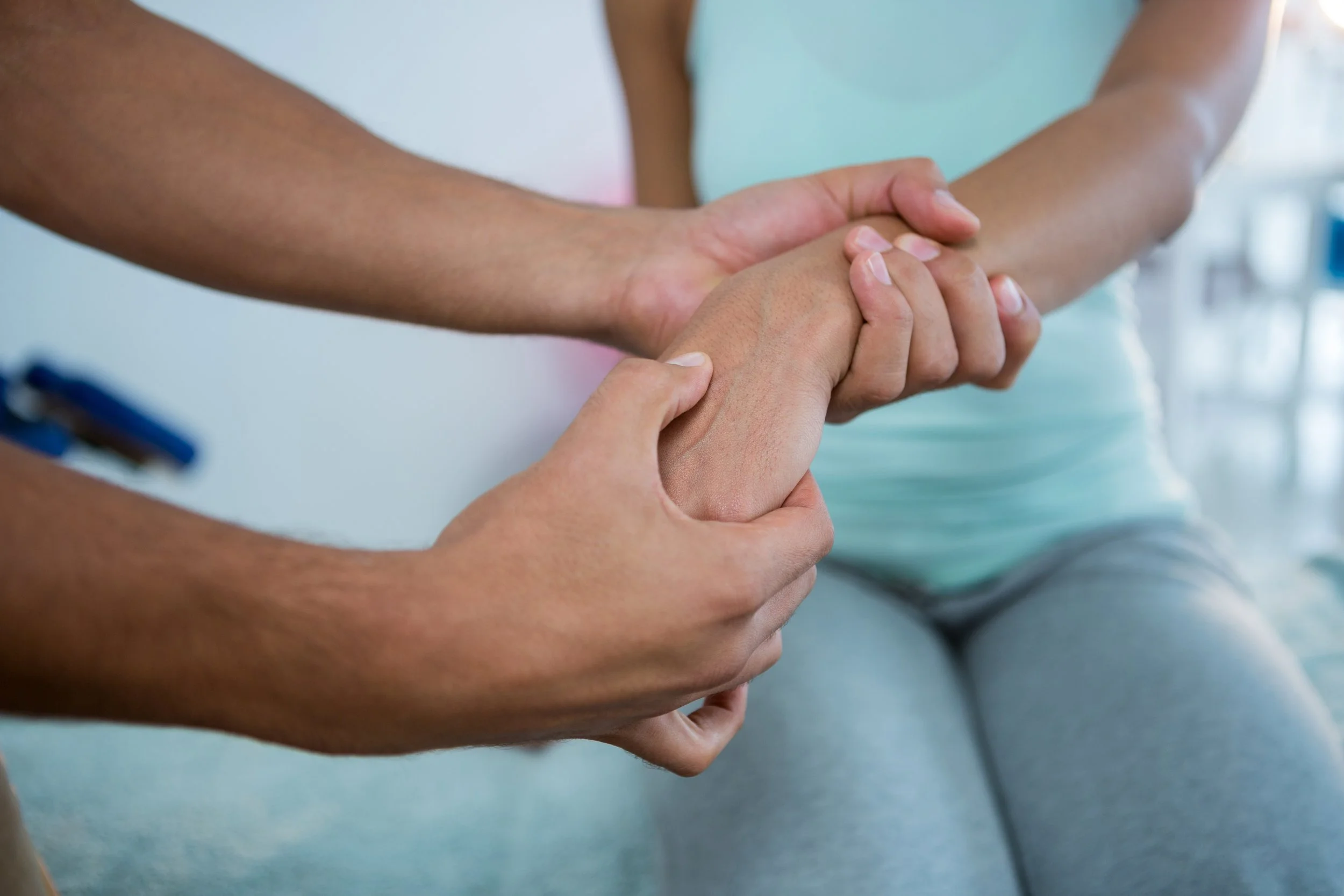
Osteopaths use a broad range of gentle hands-on techniques including soft tissue stretching, deep tactile pressure, and mobilisation or manipulation of joints.

In some cases, Osteopaths can complement the advice given by GPs. For example, people who suffer from arthritis are often prescribed medication by their GP. In addition to that, Osteopaths can ease the pain caused by joint and muscle stiffness, by improving joint mobility and the flow of blood to the joints, and show arthritis sufferers how to prevent causing injury to themselves.

Osteopathy is a five-year university course, which includes a degree and masters qualification. Senior Osteopathy students complete clinical training under the supervision of registered Osteopaths at student teaching clinics.

Osteopaths believe in working as part of a health system of health providers and often refer back to the G.P. or another allied health professional where appropriate.

Benefits of Osteopathy

Osteopathic treatment in itself is not 'preventative'. Osteopaths respect the body's natural ability as a self-regulating mechanism and only intervene when pain or discomfort is present. The benefits of osteopathy are the general improvement in mobility and structural stability of the body. In turn, other systems of the body such as the circulatory, nervous and lymphatic systems function more effectively and for a number of general conditions, minimal treatment is required.

Osteopathy and sleep

A key indicator of pain or discomfort is lack of sleep or restless nights. An effective osteopathic treatment outcome often reflects the first signs of recovery with a good night's sleep. Poor sleep patterns only serve to magnify the body's inability to function adequately and reduce our psychosomatic (Psychosomatic illnesses are those in which physical symptoms are caused or aggravated by emotional factors) ability to cope with pain.

Osteopathy and the nervous, circulatory and lymphatic systems

Osteopathic treatment positively affects the nervous, circulatory and lymphatic systems, to deliver a more balanced body and better health overall. This combined with good dietary and /or exercise prescription can enhance a patient's well being and often leads to a positive approach to individual health responsibility.

Osteopathy and back pain

With our lives becoming increasingly busy, yet more sedentary, Osteopaths can offer prevention advice such as stretching exercises, lifting techniques, posture, breathing and stress reduction which is a great way for individuals to maintain their own health. In addition some lifestyle changes including diet or workplace ergonomics can dramatically improve ones health and reduce ongoing health costs.

Early intervention by an Osteopath means you can be aware of potential sources of referred pain, and how you can make changes to your lifestyle now, so you won't have to deal with the pain later on.

Preventing injuries means less time off work and therefore more time keeping active and enjoying the benefits of general good health. It is vitally important for all people to be aware of how injuries can occur and what we can all do to avoid them.

What does osteopathic treatment involve?

The first visit to an osteopath will run along the same lines as an initial visit to a GP. A complete medical history is taken and questions asked about lifestyle, diet and emotional status. The osteopath will want to hear about all symptoms, as well as details of any past accidents or traumas, even if they may seem unrelated to the patient's current problem.

The patient may be asked to remove some outer clothing and to perform some simple movements. This is so the osteopath can observe how the patient is using their body, identify any obvious mobility impairment and evaluate posture. Neurological and orthopaedic tests help the osteopath to eliminate possible underlying pathologies and differentiate the basis of the patient's complaint.

Osteopaths are highly trained to manually locate points of restriction or excessive strain in various parts of the body. Using a finely tuned sense of touch or palpation, the osteopath will assess the spine, joints, muscles and tendons. An osteopath may also refer for blood tests or X-rays to confirm findings, or review existing diagnostic results where available.

The initial consultation will take around 45 minutes to complete, after which the osteopath will be able to offer a diagnosis and discuss a treatment program. Treatment could include such techniques as soft tissue stretching, to increase blood flow and improve flexibility of joints and muscles; articulation to mobilise joints by being passively taken through their range of motion; and muscle energy, to release tightness on the muscles by alternatively being stretched and made to work against resistance.

If the diagnosis is one that requires further investigation or specialist intervention, an osteopath will suggest a referral to an appropriate practitioner. Osteopaths often treat in conjunction with a GP, dentist, podiatrist or other health care professional.

Because osteopathy emphasises self-healing, an osteopath may also advise dietary changes, home exercise programs and lifestyle adjustments. All treatment programs are highly individualised and depend on the patient's current condition, past history, and ability to adapt to change. Most simple problems often require only 3-4 treatments.

Why you shouldn't ignore the pain

If you ignore the signs of back pain, this can develop into other forms of referred pain around the body, such as neck, shoulder or leg pain. Longer term this can have deep psychological ramifications which makes it harder for a patient to accept recovery as an achievable goal and like most long term health conditions can lead to depression.

According to osteopathic philosophy, all parts of the body are interconnected and affect each other. However, if someone experiencing back pain does visit an Osteopath, this means the back pain can be treated and potential referred pain can be avoided. Of course, this improves your overall health and wellbeing, allowing you to lead a more active and healthy lifestyle.

This article originally appeared on http://www.medicalnewstoday.com/articles/70381.php?page=2 and was Written by Christian Nordqvist

Autism and REST Float Therapy

Float Therapy is being noted as a positive therapy for people with Autism, as well as a form of psychological therapy. This is due to the reduced stimulation and low sensory input required by the brain. The amount of information that has to be received, monitored and processed is significantly reduced in a sensory deprivation tank (float tank) and is being used as treatment to regulate the biochemistry of the brain and nervous system.

Q: What does Floatation REST stand for?

A: REST was an acronym coined by the research team of Dr. Peter Suedfeld and Dr. Roderick Borrie. It has two usages: Dr. Suedfeld preferred Restricted Environmental Stimulus Technique while Dr. Borrie preferred Reduced Environmental Stress Therapy, a term which is easier for laymen to understand and speaks more to the practical applications of floatation therapy.

REST as a Treatment for Children with Autism

Several studies suggest that average levels of stimulation may be too high for autistic children (C. Hutt, S. Hutt, Lee, & Ounsted, 1964; Margolies, 1977; Schechter, Shurley, Toussieng, & Maier, 1969; Suedfeld & Schwartz, 1983). Alternatively, others attribute the problem to a deprivation of sensory input (Moore & Shiek, 1971; Williams & Harper, 1974). Theories and evidence from clinical observations converge on a characterization of autism as an abnormal reaction to environmental stimuli or a dysfunction in the ability to adequately process average levels of stimuli (American Psychiatric Association, 1987; Fein, Waterhouse, Lucci, & Snyder, 1985; Ornitz & Ritvo, 1976; Wing & Gould, 1979). Bartak, Rutter, and Cox (1975) have shown that individuals with autism have limited or restricted interactions. Theories consistent with this evidence suggest that exposure to average levels of stimuli results in a cognitive processing breakdown and an abnormal (restrictive) response to the environment (e.g., Hermelin, 1976; Rutter, 1983; Shah & Wing, 1986). If these theories are correct, one would expect a reduction in the amount of stimuli these individuals are required to process to result in a reduction of autistic symptoms and a desire for stimulation.

Restricted environmental stimulation therapy (REST) as a treatment for autistic children.

This study explored the usefulness of 48 hours of Restricted Environmental Stimulation Therapy (REST) as a treatment for autistic children. In order to provide quantified objective measures for evaluating the effects of this treatment, a battery of psychological tests was developed which would be useful and practical for the assessment of these children in regular diagnostic settings. Several positive changes in learning, social and play behavior, and cognitive functioning were noted.

First Time in a Flotation Tank

I’d been wanting to try this for years. So for my birthday this year, my husband bought me three one-hour float sessions. This was my first session.

I mentioned it on Facebook before I went to float, and since then seemingly everyone has asked about it. Several FB friends private messaged me to see how it went. Some friends called. One gal from my church even stopped me in Target this weekend and asked about it. Plus, this morning I got a text from my mother-in-law saying, “I need to know how the sensory tank experience was.”

So here’s the rundown, start to finish.

I went to bed early the night before, and woke before anyone else in my house. They advised don’t eat a lot or drink caffeine before you float. (It’s called floating – I’m hip with the lingo now.) So I ate a protein bar and drank half a glass of water. Next I showered – you’re suppose to enter the tank clean and free of lotions, hair products, etc. I packed the kids’ lunches for school, and then slipped off in the early morning mist for my 7:30 AM appointment.

When I arrived, the owner of the establishment gave me a few pointers on what to expect and how to have a successful float. I’d already read a lot on this myself. (That won’t surprise any of you that know me well.) The idea is to not have information coming into your brain from your senses – sight, touch, smell, you get the idea. It’s also not to put any strain on the body – no need to move, support yourself, resist gravity.

The goal of all this depends on the floater.

  • For some, it’s just to deeply relax the muscles. This is said to be great for rehabbing injuries, recovering from a strenuous workout, or for conditions such as fibromyalgia.
  • For some, it’s to enter a deep state of relaxation. To escape the outside world, de-stress, lower the blood pressure, and feel the happy result which is a large amount of dopamine released in the brain.
  • For some, it’s to gain rest. It’s been scientifically proven that an hour in the tank is equivalent to four hours of sleep. Those working shift work, experiencing jet lag, or wrestling with insomnia appreciate this.
  • And some are after the reported enhanced focus and creativity that comes with the theta brain waves that result from the stillness and lack of sensory input. Theta waves they’re called – the ones we experience when we’re in-between asleep and awake.

Others, like me, are just intrigued by it all, and like trying new things.

She showed me around the tank area, then left me alone in the dimly lit room. I put in the provided wax ear plugs – this reduces noise and keeps the salt water out of your ear canals. I undressed. You can wear a swim suit but the idea is not to feel anything against your skin so they recommend you enter the tank naked.

Yep.

I stepped inside the warm tank. The water was about 10 inches deep. I knelt down, and closed the door to the tank – I’m now in total darkness. From my kneeling position I put my hands down on the bottom of the tank and walk my them backwards, kind of like a crab walk – and then stretch myself out as if lying down on a couch.

At that point, rather than sinking to the bottom of the tank, I remain suspended at water level. Weightless in warm water.

There’s about 1,000 pounds of Epsom salt in that water holding me up. Truly, one thousand pounds. The water itself has sort of a slick feeling to it, due to all the dissolved salt I assume. And it’s heated to the temperature of my body.  Because I am weightless in this liquidly saline solution, I can float perfectly still. And because the water and my body are the same temp, I get the subtle sensation after a while that my body has disappeared.

But that’s not the first sensation I get. The very first sensation I experience immediately after laying down is a spinning sensation. It felt like I had turned 180 degrees within seconds of laying down on the water. But I knew this wasn’t really possible. The tank is rectagular. And not wide enough for me to fit fully sideways in it.

The spinning sensation was easy to stop by moving close enough to one of the sides of the tank to touch it with my hand or toes. Touching the tank immediately “grounds” you and the sensation stops. Crazy how that works. After a short while, the rotating feeling ended and I no longer needed to touch the tank.

For the first maybe fifteen minutes – you lose track of time in there – soothing music played in the tank along with the sound of ocean waves. It helped calm me as I got used to this very new experience.  My senses were on high alert as I took in my new surroundings – or lack there of.  And I wondered if I’d be able to settle into the “theata state” or not.

Being a journalist by training and a writer by trade, one part of me was experiencing this – determined to relax deeply – while the other part of me was documenting it and analyzing it.

I discovered the tank is a good place to pray – no distractions. I prayed frequently as the spa-like music played. Meanwhile, as long as I remained still and didn’t create any movement or waves, I couldn’t really feel where I ended or where the water began.

When the music stopped, I was in silence. Dark silence. Stillness. Except that I could hear myself breathing. You can’t help but hear yourself breathing. And here’s another discovery I made about the tank. It’s not only a good place to hear yourself think, it’s the only place I can hear myself blink!

I opened my eyes when the music stopped. Blackness. I blinked. Inky blackness. I blinked again – and I could hear myself blinking. Did you know it makes a noise when you blink? It sounded a lot like the noise my iPhone makes when I snap a photo.

I blinked for a while, fascinated with the sound.

Several more minutes passed – maybe 10? – and I believe I briefly started to hear my own heart beat. Or maybe it was blood flowing and pulsing through my neck in that spot where nurses take pulses. I’m not certain – I only heard it briefly.  I remembering thinking this must be what it’s like to be in a womb. Then my breathing slowed down and grew quieter. I no longer heard the heart beat sound.

I entered the theta state.

I never fell asleep – I just remained relaxed and still and let my thoughts go where ever they wandered. I can’t tell you where they went because I don’t really recall, not totally. (It’s like trying to recall what you were thinking in the two minutes right before you fell asleep last night.)

I very much wanted to see what this state was like, and what my mind would think/do. At the same time, I was ever so slightly worried about it. During college, my roommate Amy and I watched a (fictional) movie called Altered States about a Harvard scientist experimenting with a sensory deprivation tank. During long floats, with the aid of psychotropic drugs, he would regress into a savage being. He’d wake up the next day and find himself in a local zoo, covered in blood, with the carcass of a antelope or something beside him. So you understand my slight apprehension over what I would think about in that tank!

I didn’t have any hallucinations or “out-of-body” experiences. I didn’t have any grand epiphanies or eureka moments either. I just floated. Suspended somewhere between sleep and space.  In calm and salt.


I do remember noting that I felt very nonjudgmental while floating there.

I knew that the owner would knock three times on the tank door when my hour was up. I was to knock three times in response, and then she’d leave the room again. If I’d fallen asleep inside, she’d keep knocking until I awoke and knocked back.

I suddenly came “up” out of thea state into a relaxed but more alert state. I wondered what time it was, how much time had passed, and how much time I had left? Very shortly after that, I heard three knocks. My time was up.

I survived my float with out freaking out. And without turning savage and eating a gazelle. (It’s safe, Amy.)


Here’s some questions I’ve been asked about it:

1)  Did your hands and feet get wrinkly?  No. Not at all. That only happens when salt is drawn out of your body into the surrounding water. Salt enters your body when floating – and that is a healthy thing.

2)  Did your skin or hair turn dry from the salt? No, not at all. In fact, they may have gotten a bit softer.

3)  Can you drown in there? No. It’s only 10 inch deep water. And at any time you can sit up or bend your knee and your foot will touch the bottom.

4)  Did it smell like salt water, like the ocean? No. And this may have been specific to the brand of tank I was in, but there was a slight rubbery smell from the rubber that rimmed the door to the tank.  My daughter asked if I got used to the rubber smell, and therefore it “went away”? I told her no, I smelled it the entire time – which didn’t help the sensory deprivation goal. My husband then reminded my daughter that I have a very accute sense of smell – he thinks others wouldn’t notice it like I did. He’s probably right.

5)  Did you get claustrophobic in there? I worried a little about that in advance. But I was determined not to. I decided to do the whole “mind over matter” thing and resist any feelings of claustrophobia. A couple times I reminded myself: I can sit up and open that door and get out of this any time I want to. But I did not spend the hour fighting against the urge to scream or claw my way out of the tank.


I left there in a good mood. Not a hyper-excited good mood, more a contented and relaxed good mood.

And here’s perhaps the best part.

I came home after my float, got into a hot shower – I opted to rinse off the salt at home rather than there – threw on some yoga pants and headed for my home office. I sat down and worked for 6 1/2 hours straight.

Super focused. Super calm. Super productive.

No coffee needed.

Relaxed and yet energized, I calmly and contentedly blazed through my to-do list. The same to-do list I’d been mostly ignoring for the last couple  few several days because I never felt like buckling down and making myself tackle certain pieces of it. Now I selected a task, started it, saw it thru completion, and then moved on to the next task. All.The.Way.Through.My.List.

I didn’t get bored, or antsy, or sucked into an internet rabbit hole. You know the kind where you find yourself 40 minutes later watching YouTube videos of laughing babies and you have no idea how you got there? Yeah, none of that.

So my verdict?

It’s an interesting experience. Slightly weird, yes – at least at first. Yet also relaxing once you make peace with the idea. It’s probably not for everyone. You probably could get many of the same benefits with a good massage and/or a hot tub. But this was definitely interesting. And I tend to like interesting so long as it’s not totally whack.

(I understand what is whack to one seems reasonable to another. To each his own. See, the tank made me less judgmental.)

Would I do it again? Yes. I think I need to in order to experience the full effect of floating because you spend a lot of time the first float trying to decide if you are going to like this or not, and wondering what will happen next. I think my second time around I’ll be able to relax into it more from the get-go.

Thankfully, Rick bought me three of these floats so I’ll let you know how float # 2 goes. And I’ll decide then if I’m going to use the third float, or trade it in towards a session in the infrared sauna they have – which I’ve also been wanting to try.

So, do you think would you try this flotation tank thing if you had the chance?

This article originally appeared on http://www.rachelolsen.com/time-flotation-tank/ was written by Rachel Olsen