
Massage & Depression

We've all had days where we feel sad or blue. Nobody can be happy all of the time, and changes in mood, feelings of sadness sometimes, are perfectly normal. For some people, however, these feelings are more persistent and severe, interfering with everyday activities, lowering energy levels and interrupting sleep, for example. When these feelings begin to take over and noticeably change a person’s quality of life, seeing a mental health professional—and getting a depression diagnosis—can be the first step in getting the help they need.

For many who suffer, the solution most talked about is psychotherapy, where a person sees a trained mental health professional to talk (and perhaps be prescribed medication). But that approach doesn’t always work equally well for everyone. Now, people are also beginning to better understand how a combination of treatment options can be beneficial, and massage therapy is showing some promise in helping people better handle this condition.

Defining Depression

Perhaps one of the most difficult things about depression when talking about ways to help people who suffer is that arriving at a simple, straightforward definition of depression is next to impossible. Depression, unlike some other medical conditions, is seemingly fluid in nature, meaning the cause(s) and how symptoms manifest are often unique to the individual and can be a secondary complaint of another primary health condition, such as Alzheimer’s, for example, or other mental health issues. In other words, my depression isn’t your depression isn’t someone else’s depression.

That’s not to suggest, however, that there aren’t guidelines around diagnosing depression. Some people might think that depression is simply someone who is sad, but there’s a lot more to this condition than simply feeling down. Yes, sadness and unhappiness are definitely indicators of depression but, according to the Mayo Clinic, so are anger and irritability, loss of interest in activities that were once enjoyable, sleep disturbances, changes in appetite, cognitive problems, as well as physical pain, such as back pain or headaches.

There can also be different types of depression. For example, some women experience depression both during pregnancy and after delivery, while other people may be affected seasonally or have anxiety that accompanies the depression.

The Benefits of Massage

When you ask exactly how massage therapy works to benefit people with depression, the most accurate answer is “we don’t yet know.” But that’s not to say the benefits aren’t real, and some, like Christopher Moyer, PhD and assistant professor of psychology at the University of Wisconsin–Stout, posit that massage therapy may work in similar ways as psychotherapy. “The size and effect of massage therapy on trait anxiety and depression is virtually the same as that routinely found in the research studies of psychotherapy for those same conditions,” he explains. “Typically, both take place in a private setting and are based on a ‘50-minute hour’ for the length of the session. Repeated sessions on a weekly schedule—or similar—would be a traditional or common pattern when the goal is long-term reduction of anxiety or depression.”

The other striking similarity is that both are dependent on an interpersonal relationship founded on trust. “Some psychotherapy researchers think that the existence of the trusting relationship—sometimes referred to as the therapeutic bond, or as the working alliance—is the most important component of psychotherapy’s effectiveness,” Moyer says. “And the same may also be true for massage therapy, though this is something that needs to be researched.”

Remember, too, that depression isn’t just mental health issues—some of the symptoms manifest physically, too. “Depression is considered a mental illness, but one feels it in the body as well, a sense of heaviness in the corporeal,” says Alice Sanvito, a massage therapist and owner of Massage-St. Louis in St. Louis, Missouri. “The physical experience of massage can change the physical sensation of heaviness to something lighter and can restore the feeling of living in one’s body again instead of being lost in one’s head.”

Moyer suggests something similar. “It’s tempting to say that yes, psychotherapy ought to have the greater potential to help because it ought to provide the person with skills and insight that reduce anxiety and depression, and that help the person avoid them in the future,” he explains. “And who is to say that massage therapy doesn’t do something similar to that? It’s possible that receiving massage therapy gives a person a kind of insight, in that it reeducates the person as to how their body and mind ought to feel when they are relaxed, healthy, less anxious and less depressed.”

There’s also the potential that—similar to chronic pain—some of the value of massage therapy for people with depression comes from interrupting the pattern of symptoms on a regular basis. “Each time one interrupts the pattern and experiences calm, it’s easier to remember what it’s like to live in a more normal state, gives one hope that it is possible,” Sanvito suggests.

The problem, however, is defining what regular means. Although research seems to suggest that more than one massage therapy session is more beneficial for people dealing with depression, beyond that, the information available gets fuzzier. “We do not yet have clear information on how many sessions of massage therapy, or in what pattern or frequency, are optimal or necessary,” Moyer explains. “Weekly sessions would be a good place to start. Then, depending on the response to treatment, that schedule could be adjusted as deemed necessary.

What You Need to Know

The constant in all of this is that there is no constant, meaning that massage therapists working with clients who suffer from depression need to educate themselves about the condition. In fact, Moyer believes all massage therapists should have some familiarity with both anxiety and depressive disorders because both are so common today.

Assess. Although an argument could be made that things are changing—you see more commercials dealing with mental health conditions, for example—the reality for many of these people is that mental health issues may carry a stigma. So, massage therapists can’t assume that clients who might be suffering from depression are going to offer this information up themselves. Some people, too, might not be aware they’re suffering from this disorder, so being aware of how depression can affect a person—as well as what some of the major symptoms are—may be helpful.

Obviously, you need to stay within your scope of practice, but that doesn’t mean you can’t—orshouldn’t—look for indications that current and potential clients might be dealing with depression.

Intake. Going hand in hand with assessment are your intake policies. Again, some clients aren’t going to tell you they are being treated for depression, so being proactive about asking them is a good idea. Similar to how you ask for other health information during the intake process, you can ask clients if they’ve been feeling anxious or depressed. Or, add questions about feelings of depression to the intake form clients complete before a massage session.

As with assessment, you need to make sure you are staying within your scope of practice. “When I suggest that massage therapists should inquire about anxiety and depression as part of intake assessment, I am not suggesting that they change their practice or conduct themselves more like a social worker, psychologist or psychiatrist,” says Moyer. “Rather, I am highlighting how intake assessment is an unrivaled opportunity to gather information that can be helpful to clients.”

Be realistic. You also need to understand what massage therapy both can and cannot offer. Particularly if you have clients who are specifically seeing you for help dealing with depression, you need to be realistic about results. “Massage is not a magic bullet to relieve depression,” Sanvito says, “but having a temporary break in the sense of physical and emotional heaviness one feels is a great relief.”

The key here is to remember that these clients are most likely seeing other health care professionals for treatment, and so massage therapy is one approach your clients might be using to handle the symptoms of this disorder. “It should also be noted that massage therapy should not be used as a stand-alone treatment in serious cases, at least not at present,” Moyer cautions. “Medication and psychotherapy both have a much larger and stronger evidence base supporting their effectiveness. For serious cases, massage therapy should probably only be used as an additional treatment.”

Keep current on research. Although definitive research on how massage therapy works for clients who are dealing with depression is limited, staying current on what is available is imperative. Remember, too, that although we might not know exactly how massage therapy works, there are some strong studies available today that illustrate massage therapy can be useful in helping reduce feelings of depression.

Related: Research Roundup on Massage & Mental Health

Network with mental health professionals. In order to effectively work with clients who are suffering from depression, being networked to other health care professionals they may see for treatment is a good idea. “Such interprofessional relationships allow clients to be referred when needed, and also open up the possibility for coordinated care,” explains Moyer. “It is an exciting possibility that anxiety and depression might be able to be treated most effectively, at least in some cases, when a client is receiving psychotherapy from a mental health expert and also receiving massage therapy from a massage therapist.”

When looking to build relationships with mental health professionals, remember that you need to be armed with up-to-date information on the ways in which massage therapy can benefit their patients, as well as have a basic understanding of depression. Again, a solid understanding of research is going to be imperative, and don’t let the limited number of studies on the subject deter you from reaching out. “I suspect there are many mental health professionals who would welcome the opportunity to learn more about the effectiveness of massage therapy,” Moyer says, “and to have another treatment option for their patients to add to other well-established treatments.”

As we continue to learn more about depression, the ways in which this condition can be treated are also expanding—and massage therapy is showing some real promise in being a good addition to the already existing treatment options.

This article originally appeared on amtamassage.org and was written by Michelle Valet.

Understanding Nerves: What's in Your Head?

The cranial nerves are a set of 12 paired nerves that arise directly from the brain. The first two nerves (olfactory and optic) arise from the cerebrum, whereas the remaining ten emerge from the brain stem.

The names of the cranial nerves relate to their function and they are also numerically identified in roman numerals (I-XII).

In this article, we shall summarise the anatomy of the cranial nerves.

Origin of the Cranial Nerves

There are twelve cranial nerves in total. The olfactory nerve (CN I) and optic nerve (CN II) originate from the cerebrum.

Cranial nerves III – XII arise from the brain stem (Figure 1). They can arise from a specific part of the brain stem (midbrain, pons or medulla), or from a junction between two parts:

  • Midbrain – the trochlear nerve (IV) comes from the posterior side of the midbrain. It has the longest intracranial length of all the cranial nerves.
  • Midbrain-pontine junction – oculomotor (III).
  • Pons – trigeminal (V).
  • Pontine-medulla junction – abducens, facial, vestibulocochlear (VI-VIII).
  • Medulla Oblongata – posterior to the olive: glossopharyngeal, vagus, accessory (IX-XI). Anterior to the olive: hypoglossal (XII).

The cranial nerves are numbered by their location on the brain stem (superior to inferior, then medial to lateral) and the order of their exit from the cranium (anterior to posterior) (Figures 1 & 2).

By Patrick J. Lynch, medical illustrator derivative work: Beao derivative work: Dwstultz [CC BY 2.5], via Wikimedia Commons

Figure 1 – The location of the cranial nerves on the cerebrum and brainstem.

© 2015-2017 TeachMeAnatomy.com [CC-BY-NC-ND 4.0]


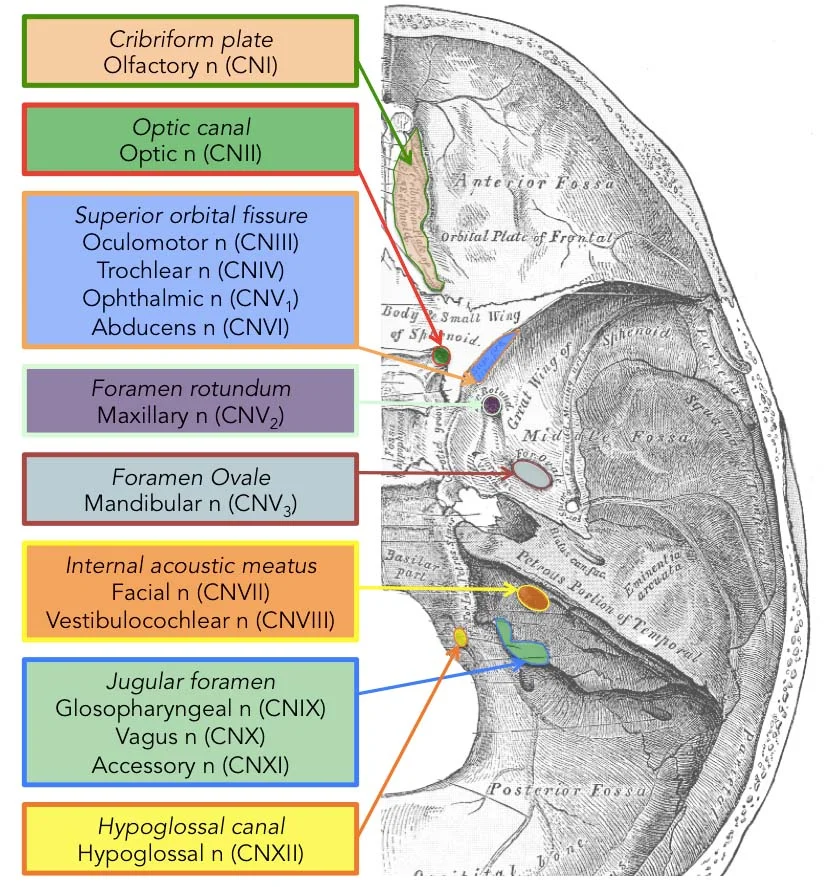
Figure 2 – Superior view of the skull base showing the foramina and which cranial nerves pass through them.

Tip: Cranial nerves with the number 2 in them (e.g. 2-optic and 12-hypoglossal) exit through a canal of the same name. They are the only cranial nerves to pass through canals.

Modalities

Simplistically, each cranial nerve can be described as being sensory, motor or both. They can more specifically transmit seven types of information; three are unique to cranial nerves (SSS, SVS and SVM). See table 1 for a summary of the cranial nerves, their modalities and functions.

Sensory (afferent) Modalities:

  • General somatic sensory (GSS) – general sensation from skin.
  • General visceral sensory (GVS) – general sensation from viscera.
  • Special somatic sensory (SSS) – senses derived from ectoderm (sight, sound, balance).
  • Special visceral sensory (SVS) – senses derived from endoderm (taste).

Motor (efferent) Modalities:

  • General somatic motor (GSM) – skeletal muscles.
  • General visceral motor (GVM) – smooth muscles of gut and autonomic motor.
  • Special visceral motor (SVM) – muscles derived from pharyngeal arches.

For a Summary Table and more info, visit here.

This article originally appeared on teachmeanatomy.info

Headaches: Causes, Diagnosis and Treatments

Headaches are one of the most common complaints, and most people experience them at some point in their life. They can affect anyone regardless of age, race, and gender.

The World Health Organization (WHO) reports that almost half of all adults worldwide will have experienced a headache within the last year.

A headache can be a sign of stress or emotional distress, or it can result from a medical disorder, such as migraine or high blood pressureanxiety or depression. It can lead to other problems. People with chronic migraine headaches, for example, may find it hard to attend work or school regularly.

Migraines, cluster headaches, and hangovers are some of the causes of headaches.

Contents of this article:

  1. What causes a headache?
  2. Types of headache
  3. Diagnosis
  4. Treatment

What causes a headache?


Headache is a common complaint worldwide.

A headache can occur in any part of the head, on both sides of the head, or just in one location.

A headaches can radiate across the head from a central point or have a vise-like quality. They can be sharp, throbbing or dull, appear gradually or suddenly. They can last from less than an hour up to several days.

There are different ways to define headaches. The International Headache Society (IHS) categorize headaches as primary, when they are not caused by another condition, or secondary, when there is a further underlying cause.

Primary headaches

Primary headaches are stand-alone illnesses caused directly by the overactivity of, or problems with, structures in the head that are pain-sensitive.

This includes the blood vessels, muscles, and nerves of the head and neck. They may also result from changes in chemical activity in the brain.

Common primary headaches include migraines, cluster headaches, and tension headaches.

Secondary headaches

Secondary headaches are symptoms that happen when another condition stimulates the pain-sensitive nerves of the head.

A wide range of different conditions can cause secondary headaches.

These include:


Eating something very cold can lead to a "brain freeze."

As headaches can be a symptom of a serious condition, it is important to seek medical advice if they become more severe, regular, or persistent.

For example, if the headache is more painful and disruptive than previous headaches, worsens, or fails to improve with medication or is accompanied by other symptoms such as confusion, fever, sensory changes, and stiffness in the neck, a doctor should be contacted immediately.

Types of headache

The symptoms of a headache can depend on the type.

Tension-type headaches

Tension-type headaches are a common form of primary headache.

The person can feel as if they have a tight band around the head, with a constant, dull ache on both sides. The pain may spread to or from the neck. Such headaches normally begin slowly and gradually in the middle of the day.

Tension-type headaches can be either episodic or chronic. Episodic attacks are normally a few hours in duration, but can last for several days. Chronic headaches occur for 15 or more days a month for a period of at least 3 months.

Migraines

Migraine is the second most common form of primary headache and can have a major impact on the life of an individual. According to the WHO, migraine is the sixth highest cause of days lost due to disability worldwide. A migraine can last from a few hours to between 2 and 3 days.

A migraine headache may cause a pulsating, throbbing pain on one or both sides of the head. The aching may be accompanied by blurred vision, light-headedness, nausea, and sensory disturbances.

Rebound headaches

Rebound or medication-overuse headaches are the most common secondary headache.

They stem from an excessive use of medication to treat headache symptoms. They usually begin early in the day and persist throughout the day. They may improve with pain medication, but worsen when its effects wear off.

Rebound headaches can cause a range of symptoms, and the pain can be different each day. Along with the headache itself, rebound headaches can cause neck pain, restlessness, a feeling of nasal congestion, and reduced sleep quality.

Cluster headaches

Cluster headaches are a less common form of primary headache. They strike quickly, one or more times daily around the same time each day and often without warning.

They usually last between 15 minutes and 3 hours, and they persist for the duration of what is known as a cluster period, which normally lasts 6 to 12 weeks.

The pain caused by cluster headaches is severe, often described as sharp or burning, and it is normally located in or around one eye.

The affected area may become red and swollen, the eyelid may droop and the nasal passage on the affected side may become stuffy and runny.

Diagnosis

A doctor will usually be able to diagnose a particular type of headache through a description of the condition, the type of pain and the timing and pattern of attacks.

It may be a good idea to keep a diary detailing the symptoms of regular headaches and any possible triggers. This can help both the patient and the doctor in identifying the exact nature and possible cause of the headaches.

If the nature of the headache appears to be complex, tests may be carried out to eliminate more serious causes.

Further testing could include blood tests, X-rays, and brain scans, such as CT and MRI.

Treatment

The most common ways of treating headaches are rest and pain relief medication.

Generic pain relief medication is available over the counter (OTC), or doctors can prescribe preventative medication, such as tricyclic antidepressants, anti-epileptic drugs, and beta blockers.

It is important to follow the doctor's advice because overusing pain relief medication can lead to rebound headaches.

The treatment of rebound headaches involves the reducing or stopping pain relief medication.

In extreme cases, a short hospital stay may be needed to manage withdrawal safely and effectively.

Self-care

A number of steps can be taken to reduce the risk of headaches and to ease the pain if they do occur:

  • Apply a heat pack or ice pack to your head or neck, but avoid extreme temperatures
  • Avoid stressors, where possible, and develop healthy coping strategies for unavoidable stress
  • Eat regular meals, taking care to maintain stable blood sugar

A hot shower can help, although in one rare condition hot water exposure can trigger headaches.

Exercising regularly and getting enough rest and regular sleep contribute to overall health and stress reduction.

Several alternative forms of treatment for headaches are also available, but it is important to consult a doctor before making any major changes or beginning any alternative forms of treatment.

Acupuncture is an alternative therapy that may help relieve headaches.

Alternative approaches include:

  • Acupuncture
  • Cognitive behavior therapy
  • Herbal and nutritional health products
  • Hypnosis
  • Meditation

(Research: Acupuncture and Migraine)

Sometimes, a headache may result from a deficiency of a particular nutrient or nutrients, especially magnesium and certain B vitamins.

Nutrient deficiencies can be due to a poor quality diet, underlying malabsorption issues, or other medical conditions.

Anyone with a suspected nutrient deficiency should work with a qualified health professional to diagnose and correct the deficiency in a sustainable and holistic way, rather than relying on an isolated supplement.

The WHO points out that headaches are often not taken seriously because they are sporadic, most headaches do not lead to death, and they are not contagious.

They call for more resources to be allocated for the treatment of headache disorders, because of the huge health burden they represent.

This article originally appeared on medicalnewstoday.com Written by James McIntosh

How Hormones Control Us

Although we rarely think about the endocrine system, it influences almost every cell, organ, and function of our bodies. The endocrine system plays a role in regulating mood, growth and development, tissue function, metabolism, and sexual function and reproductive processes.

In general, the endocrine system is in charge of body processes that happen slowly, such as cell growth. Faster processes like breathing and body movement are controlled by the nervous system. But even though the nervous system and endocrine system are separate systems, they often work together to help the body function properly.

The foundations of the endocrine system are the hormones and glands. As the body's chemical messengers, hormones transfer information and instructions from one set of cells to another. Many different hormones move through the bloodstream, but each type of hormone is designed to affect only certain cells.

A gland is a group of cells that produces and secretes, or gives off, chemicals. A gland selects and removes materials from the blood, processes them, and secretes the finished chemical product for use somewhere in the body.

Some types of glands release their secretions in specific areas. For instance, exocrine (pronounced: EK-suh-krin) glands, such as the sweat and salivary glands, release secretions in the skin or inside the mouth. Endocrine glands, on the other hand, release more than 20 major hormones directly into the bloodstream where they can be transported to cells in other parts of the body.

The major glands that make up the human endocrine system include the:

  • hypothalamus
  • pituitary gland
  • thyroid
  • parathyroids
  • adrenal glands
  • pineal body
  • reproductive glands (which include the ovaries and testes)
  • pancreas

Want to learn more? Read more here.