
Our Moods, Our Foods

Eating a meal, any meal, reliably makes an animal, any animal, calmer and more lethargic. This means humans, too. Hunger makes animals alert and irritable, which explains why couples always fight about where to eat dinner. This emotional response encourages the animals to find food.

But all this is only in the broadest, most primal “eating = good, not eating = bad” way. The details of the relationship between foods and moods end up being a little contradictory and a lot complicated.

What we tend to think of as “emotional eating” is a specific kind of eating and a specific kind of emotion—eating sugary, fatty, carb-y, unhealthy foods as a coping mechanism for feeling upset.  In reality, “emotional eating” is a much broader term.

“We eat for a variety of different emotions and we eat in a variety of different circumstances which are in turn connected with emotions,” Meryl Gardner, a marketing professor at the University of Delaware, says.

Gardner was the lead author on a new study published in the Journal of Consumer Psychology, which looked at food choice and mood, adding to a fairly extensive body of research that already exists on the interplay between moods and foods.

There seems to be a consistent connection between negative emotions and unhealthy foods. What's less clear is what foods we're drawn to in a positive mood.

There seems to be a clear, fairly consistent connection between negative emotions and unhealthy foods, though there are individual variations for what kind of snack people want. In a bad mood, people’s hands tend to float to the cookie jar, the candy bag, the snack drawer. What’s less clear is what foods we’re drawn to in a positive mood.

Some studies say we still want treats. A 1992 study and a 2002 study (one on women, one on men) found that joy led to increased consumption of indulgent foods. A 2013 study in Appetite titled “Happy Eating: The underestimated role of overeating in a positive mood” points out the potential for increased consumption (in this case of chips and chocolate) when we’re feeling good.

Other research says just the opposite—that we’re more likely to eschew the sugar/carb rush when happy. In 2010, researchers found that people in a positive mood were more likely to choose grapes over chocolate than those in a neutral mood. Another study offers a qualification, finding that people would choose healthy foods if they felt like their good mood was going to stick around; if not, they might eat more indulgent foods, to keep the good vibes going.

Gardner’s study also found a connection between negative moods and unhealthy foods, and positive moods and healthy foods, but she and her team introduced the element of time into the equation as well. They had participants think about either the present or the future (by describing their current residence, or a possible future residence). They found that regardless of mood, long-term, future-focused thinking led to healthier choices.

“When you’re in a good mood, you take a longer-term perspective,” Gardner says. “You see the forest, not the trees... When you’re focused on the near term, when you’re looking at what’s in front of your nose, you respond with what’s going to give you quick pleasure. And that’s triggered very much by bad moods. But we can fight that.”

Dr. Leigh Gibson, a psychology professor at the University of Roehampton in London, disagrees, though he says he finds those results interesting. “I’m not sure that’s the way people normally go about their daily eating,” he says. “For habitual behaviors like eating, there tends to be an intention-behavior gap. We have all these wonderful intentions, but when it comes down to it, we’re exposed to energy-dense foods when we find ourselves hungry.”

It does seem unlikely that most of us would take the time to describe our future homes to ourselves before deciding on pizza or a salad for lunch. And as previously noted, there is little consensus on what we typically crave when we’re happy.

"Healthy eating is a modern thing that we now need because we're living so long. You could almost say the default is comfort eating."

Part of the reason why it seems our moods rarely drive us toward healthy foods, Gibson says, is that for much of human history, energy-dense foods, or what we now consider comfort foods, were the ideal thing to eat.

“We didn’t evolve as homo sapiens by eating healthy, because all we had to do was reproduce and survive until our mid-20’s,” he says. “We were quite happily sucking the marrow out of bones. We were just getting energy, protein, the basic nutrients we needed, but we didn’t have to live too long. Healthy eating is a modern, cultural thing that we now need, because we’re living so long… You could almost say the default is comfort eating.”

We’re not constantly shoveling mashed potatoes into our mouths (at least not most of the time), so of course this doesn’t mean that humans don’t ever choose healthy foods, just that when we do, it might not be in response to our emotions.

Another reason for this lack of consensus is that there are a variety of moods that can fit under the “positive” umbrella—feeling excited is very different from feeling content, and those emotions could lead to similarly divergent food choices.

For example, Gardner says we tend to go for special, often unhealthy, foods on celebratory occasions, like birthdays or Thanksgiving.

“You eat the birthday cake, you may go out in the evening and eat more appetizers and drink more cocktails than you intended, and it’s all part of the specialness of the occasion,” she says. “And we’ve all learned to celebrate with food. It’s part of so many different cultures.”

Carol Landau—a clinical professor of psychiatry, human behavior, and medicine at Brown University—points out that some comfort eaters turn everything into a celebration, rewarding themselves with food not just for special occasions, but for everyday accomplishments as well.

“Food is such an important part of culture,” Landau says. “I think we’re asking people to do a lot [by asking them] to avoid comfort eating.”

Gibson says this sort of celebratory eating seems to be more prevalent for men than women. There’s also some evidence that the foods men and women turn to for comfort are different—men often get more comfort from savory foods and “general meal-type foods,” Gibson says, as opposed to snacks. Gardner says she has also found men to be more drawn to salty foods.

Sweet foods, however, seem to be a universal crowd-pleaser.

“Sweetness is such a powerful stimulus,” Gibson says. “We’re born initially liking sweetness. It probably helps [that babies] have an appetite for breast milk and so on.”

This may well be why the go-to image of comfort eating in culture is someone crying into a pint of Ben & Jerry’s, and why so many studies on mood and food choice include chocolate as one of the unhealthy options.

“If one can characterize [comfort] foods in any simple way, it would be that they’re typically energy-dense,” Gibson says. “Therefore they’re probably high fat, and they might be sweet as well. The perfect comfort food might be chocolate.”

In the chicken-or-the-egg problem of food and mood, do the moods hatch the foods, or do the foods hatch the moods?

But as we all know, the positive effects of eating sweets are short-lived. Whether it’s a crash that comes after a sugar high, or just a feeling of guilt after eating more cookies than you planned, treats are not a ticket to long-term happiness.

So in the chicken-or-the-egg problem of food and mood, do the moods hatch the foods, or do the foods hatch the moods? Studies disagree—the relationship seems to go both ways. A couple recent studies suggest that the foods come first.

In a study published in 2012, Penn State psychology professor Dr. Helen Hendy had 44 undergraduate students keep week-long diaries of how they felt and what they ate. She analyzed the results in terms of four things the Centers for Disease Control and Prevention recommend we should limit to improve physical health: calories, carbohydrates, saturated fat, and sodium. Following those recommendations, Hendy found, seemed to have benefits for improving moods as well.

She found that the link between foods and moods played out over a period of two days—what you ate on day one was linked to how you felt on day three, etc. As usual, the correlation was more consistent with negative moods: “Consumption of calories, saturated fat, and sodium was significantly associated with increased negative mood two days later,” the study reads.

“Some of my research leads me to change my habits, and this one has,” Hendy says. “I have a big meeting [in two days], so today I’m going to watch my calories, my sodium, and my saturated fat, so I can hopefully have a chance to be in a good mood.”

A similar study, published in the British Journal of Health Psychology in 2013, had 281 undergrads keep a 21-day diary, and did find a correlation between eating fruits and vegetables one day and being in a positive mood the next day. The association with eating fruit was stronger for men, but both men and women benefitted from eating veggies. Participants’ BMI did not affect the association.

The exact reasons why healthy eating might make you happy are unclear, but Gibson posits that if you intend to eat healthily, and you follow through, that could put you in a good mood. “Achieving goals is part and parcel of emotional experience,” he says.

Both eating and emotion are such regular, consistent parts of our lives that it’s inevitable they would get tangled up together. Unfortunately, though research has illuminated some interesting possibilities as to how they relate to one another, the knot is still very much intact and it’s hard to see where one ends and the other begins.

“There’s not a very neat story there,” Gibson says. Regardless, there’s a bit more to it than just feeling sad and therefore reaching for a spoon and some ice cream, or whatever your preferred unhealthy snack is. It seems entirely possible that all eating is, in fact, emotional eating. 

This article originally appeared on theatlantic.com and was written by Julie Beck.


Need Support With Nutrition Counseling? Book With our Nutrition Therapist, Tonya Fines.

Float Therapy For Fibromyalgia Can Help Relieve Pain And Stress

Fibromyalgia is a pain condition that affects between 2 and 10% of the population in the U.S. It generally affects more women than men at a ratio of 9:1. One way to treat not only the fibromyalgia pain, but also the stress and anxiety that may accompany it is trying float tanks for fibromyalgia.

How do float tanks for fibromyalgia work?

Flotation REST (reduced environmental stimuli therapy) was developed in the 1950s by John C. Lilly, M.D. It uses a water-filled tank that is approximately the size of a bed and heated to skin temperature. The water is saturated with Epsom salts so that the patient can float without any effort.

Patients remove their clothes, enter the tank, turn off the lights, and relax. The idea is that this sensation of zero stimuli will help a person focus inward, eliminating distractions and calming the mind and body.

The Fibromyalgia Floatation Project (FFP) believes that spending an hour in a float tank will help sufferers reduce pain significantly. The project selected fibromyalgia as the condition for their case studies because the symptoms of fibromyalgia match the potential benefits of REST.

Benefits of float tanks for fibromyalgia

The benefits of float tanks for fibromyalgia have been studied for several decades. They have been shown to include the following.

Relief of stress

Thomas H. Fine, an associate professor in the department of psychiatry of the Medical College of Ohio and Roderick A. Borrie, a clinical psychologist at South Oaks Hospital in Amityville, New York, co-authored a seminal article examining the clinical effects of REST on the stress response.

They identified blood pressure, cortisol production, and muscle activity as key indicators of stress in the body. Their findings indicated that cortisol production decreased during floatation REST sessions and that:

“[There exists] the possibility of a resetting of the regulatory mechanism of cortisol across sessions.  Furthermore, cortisol, which has received more attention than the other hormones [in its role as an indicator of stress], and blood pressure, have been shown to maintain the REST effect after cessation of repeated REST sessions (Turner & Fine, 1983). This phenomenon suggests that the REST effect may be more than a simple, immediately reversible response.”

Alleviation of depression and anxiety

Float tanks for fibromyalgia have been shown to alleviate depression and anxiety with the mood elevation effects of deep relaxation. Fine and Borrie found that the effects were most pronounced when flotation REST was utilized in conjunction with other forms of counseling.

They caution, however, that severely depressed patients may need close monitoring due to the sometimes obsessive nature of thinking that can occur in the flotation tank.

Promotion of better, more restful sleep

Relaxation alone equals better, more restful sleep, and the deep relaxation of float tanks for fibromyalgia can help. Many fibromyalgia patients also suffer from restless leg syndrome, so getting a good night’s sleep can be difficult.

Since fatigue can exacerbate symptoms of fibromyalgia, the sleep-promoting deep relaxation can be a vital benefit of flotation REST.

Pain relief

Perhaps one of the most important benefits of float tanks for fibromyalgia is relief from pain. Fine and Borrie noted that:

“Flotation REST can have an important role at several stages of the pain management process. By reducing both muscle tension and pain in a relatively short time and without effort on the part of the patient, flotation provides a dramatic demonstration of the benefits of relaxation. Relief is immediate and, although temporary, offers promise of further relief from REST and other relaxation-based strategies.”

Many patients who have dealt with fibromyalgia for a long period of time give up hope for new treatments. When they realize that float tanks can help manage pain, their mental outlook may change and they may be more confident in their treatment plan.

Relief of muscle tightness

The stiffness and muscle tightness of fibromyalgia can be addressed by float tanks. A small 2012 study found that pain due to tightness of muscles was decreased significantly after just three sessions in the float tanks.

The pain-relieving effects lasted for a significant period after the treatment, which also helped to alleviate mood and make the study participants more hopeful. This increased optimism translates into better opportunities for successful treatment all around.

Corrects magnesium deficiency

Magnesium is essential to over 300 functions in the body, but people in the U.S. are chronically lacking in this important mineral. Transdermal supplementation of magnesium is the most effective delivery system. Fibromyalgia sufferers may have a magnesium deficiency that actually causes or contributes to their pain.

The magnesium solution in fibromyalgia float tanks can be absorbed through the skin. This helps to alleviate that deficiency without taking additional supplements. This can be a benefit to patients who have difficulty taking pills or who simply don’t want to take anything else.

Performance improvements

While not directly related to fibromyalgia, float tanks can also have some performance benefits.

Researchers Oshin Vartanian of the University of Toronto and Peter Suedfeld of the University of British Columbia found that musicians who floated in the tank for one hour per week for four weeks showed better technical ability at the end of the research. The researchers compared two-minute recordings before and after from the study participants and the control group. They found “a significant difference between the treatment and comparison groups on technical ability, but not on any other dimension.”

When float tanks are combined with positive imagery, athletic performance also improved without any other adjustments to amount or duration of practice. Simply floating in the tank and allowing the body and mind to fully relax seems to be what athletes need to recharge and regroup.

Float tank testimonials from fibromyalgia patients

The Fibromyalgia Flotation Project was designed for patients and interested medical professionals to test the efficacy of flotation REST treatments for fibromyalgia specifically. Two patients in particular are highlighted on their website.

Tina suffered from pain and bruising as a lasting reminder of a car accident in 1998 but couldn’t figure out why she was still in so much pain. Doctors attempted to control her pain with prescription opioids and non-steroidal anti-inflammatory drugs (NSAIDs), with disastrous results. After nearly overdosing, she finally tried flotation REST while visiting friends.

Tina describes her first experience in the tank like this:

“[It was] like stepping into a warmth that was hard to describe. I felt held, secure, safe, enveloped and surrounded by this wonderful water that was so good to feel against my painful body. I had immediate pain relief and no breakthrough pain for 17 hours after my first float.”

After seven floats, Tina puts her pain level at just 10% of what it used to be.

Float tanks improve overall quality of life

Brigitta’s fibromyalgia was not traced to any one particular incident, but the pain and dizziness made it difficult for her to really function effectively. She was unable to take pain medications because of their side effects, so she utilized acupuncture, warm baths, and exercise.

She was recruited by the Fibromyalgia Flotation Project at 70 years old and had this to say about the results:

“Flotation has made my life considerably better. I feel that it’s easier for me to take each day as it comes, which means that life gets easier. I feel much more positive and happy, and many of my friends confirm that.”

Frequently asked questions about float tanks

For first-time floaters, float tanks may be intimidating. The space is enclosed, and the act of floating is a foreign one. Some frequently asked questions about float tanks for fibromyalgia include the following.

What should I expect during my session?

People who utilize float tanks are often referred to as “floaters.” Floaters shower before entering the tank, either floating unclothed or in a bathing suit. Float sessions can last anywhere from 30 to 90 minutes.

First-time floaters may need some time to adjust to the environment of the tank, so a session of at least one hour is recommended.

Are fibromyalgia float tanks hygienic?

The water in the float tanks is saturated with magnesium sulfate nearly to the point of crystallization, just like the Dead Sea. And, just like the Dead Sea, this is not an environment in which bacteria can live.

In addition, float tanks come with a filter system that automatically filters the water after each session. Finally, floaters are asked to shower before they enter the tank, further minimizing the amount of bacteria or dirt they introduce to the tank.

Is there anyone who shouldn’t float?

Because a float tank is small and enclosed, floating may be difficult for people with claustrophobia. There are float tanks that have small windows that may help with this, but for some that might not be enough room. Those who suffer from anxiety may also find the initial sessions difficult.

How many sessions are required?

There is no perfect number of sessions, but for first-time floaters it is best to schedule a series. The sensations experienced in the tank (e.g., deep relaxation, minimal sensory input, weightlessness) may be strange and take some getting used to.
 

Reset Wellness recommends starting with a series of three, offering a reduced price for first-time floaters. Ultimately it is up to the floater to decide what works best for them.


This article originally appeared on paindoctor.com

Book online

What To Expect from an Osteopathic Treatment

If you are a new patient:

After taking an extensive case history, we do an initial structural assessment and perform motion tests and any necessary neurological and orthopedic tests. We may request other investigations if necessary for diagnosis.

We assess the range and quality of motion in joints and soft tissues and look at your general structural/ postural pattern.

The reason for taking a comprehensive case history and performing an initial assessment is to judge whether it is safe for us to use particular osteopathic techniques with you, and whether osteopathic treatment is appropriate.

We are interested in what has worked for you previously, and whether you have treatment preferences.

We can explain the treatment plan, and gain your consent before treatment. You should let us know immediately, even during the treatment, if you would like to change or stop and discuss the treatment we are giving you.

Your Osteopath will then explain to you what they have found and how they would like to approach the treatment, as well as explain what you may expect, any risks involved, and gain your consent for treatment .

The Osteopathic Treatment:

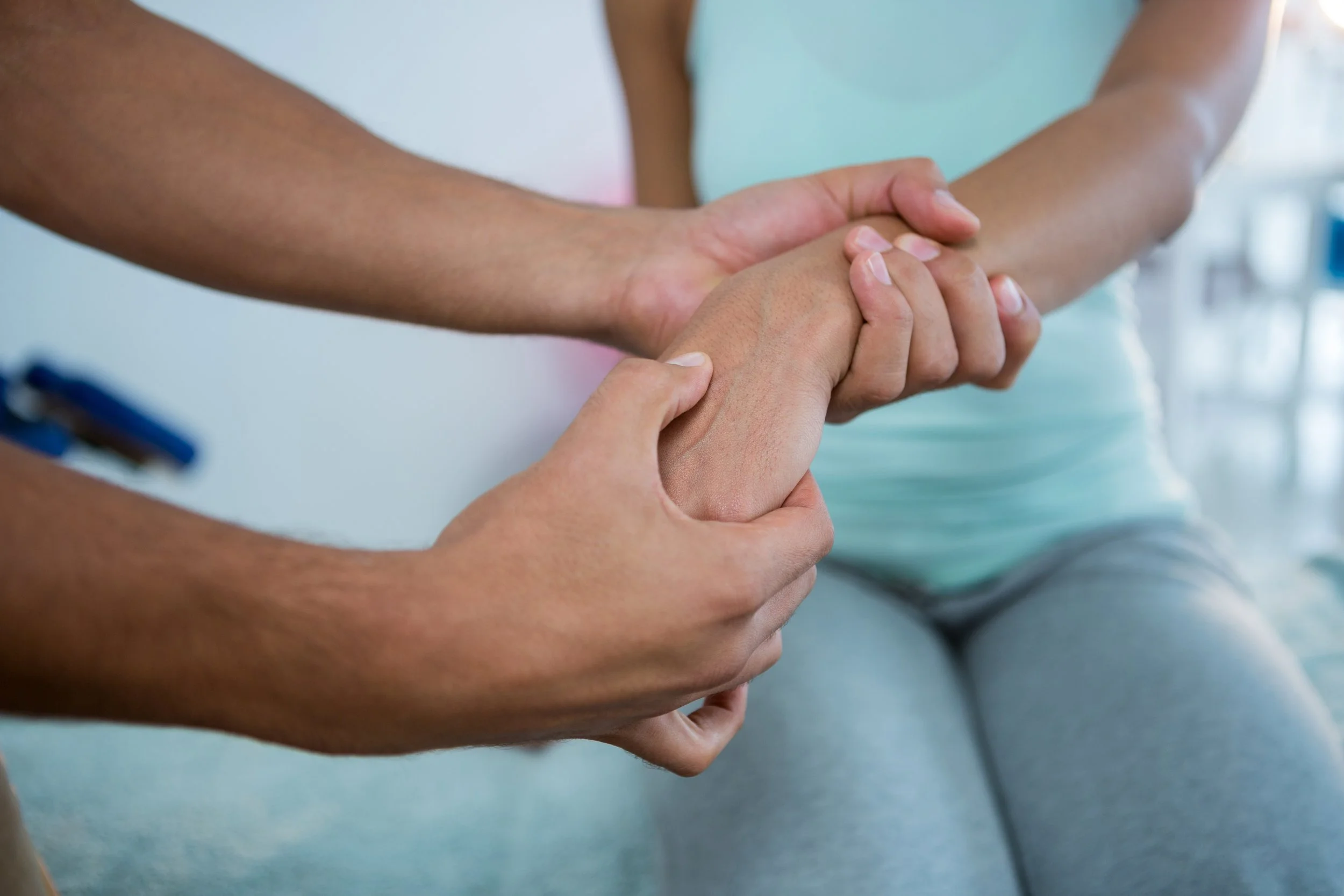
The treatment itself can vary practitioner to practitioner, but all will involve a hands-on approach.  Osteopaths have a wide variety of manual techniques they use to treat various complaints. They include:

  • Massage (soft-tissue releases)
  • Stretching
  • Articulation (joints are passively taken through their range of motion by the osteopath)
  • Muscle Energy Techniques (used to lengthen tight, contracted muscles)
  • Counterstrain (releases tight muscles by positioning the affected muscle in a shortened position to stretch the opposing muscles)
  • Manipulations (short, quick, precise low-amplitude movements used to improve range of motion at the joint)
  • Functional Techniques (gentle mobilisation of joints)
  • Visceral Techniques 
  • Osteopathy in the Cranial Field

At the end of the treatment, your Osteopath will reassess the initial movements that you performed so that we can see how effective the treatment has been. Your Osteopath may organise a return consultation and may give you some stretches and exercises to do at home to help speed up your recovery or improve your body's function. We may be able to give you advice about suitable physical activity during this recovery period.

We have special pillows so that our pregnant patients can lie comfortably.

For your Osteopathic Consultation:

Bring:

  •  X-rays, scans and results of investigations
  • Private Health Insurance card /Workcover/Motor Vehicle claim numbers/ EPC form/ DVA referral form and card

Wear:

  • Comfortable clothes. Depending on the Osteopathic Practitioner and the area of concern, some disrobing may be required, but at all times you will be draped with towels and/or provided with a gown to ensure you feel comfortable during the treatment. 

Time:

  • Allow 5-10 minutes extra for your initial consultation to fill in your information sheet.
  • Initial consults last 45-60 minutes
  • Followup treatments run for 30-45 minutes

How many Treatments Will I Need?

The number of treatments needed depends on how long you have had the problem, how severe it is, and how your body responds to treatment. 

Like any other form of therapy/treatment, occasional unwanted reactions may occur.  These usually don't last long, but if you would like your osteopath to talk to you about what is happening, please ring us. 

On average, people have between 3 to 6 Osteopathic treatments for good results. However, you may only need 1 or 2 visits.

This article originally appeared on fremantleosteopathy.com.au

Acupuncture to Safely Increase Chance of Conception

Several studies have found that women who get acupuncture treatments -- whether to treat conditions that can interfere with getting pregnant (such as polycystic ovary syndrome, or PCOS) or to increase the chances of a successful IVF -- have a higher rate of pregnancy and births. Some fertility doctors recommend acupuncture for their patients to help lower overall stress levels, because stress hormones can lower fertility hormones like progesterone. "I've referred patients to acupuncturists to do acupuncture in conjunction with a number of fertility treatments," says Kathleen M. Brennan, M.D., a reproductive endocrinologist with the UCLA Fertility and Reproductive Health Center in Los Angeles.


So how does it work? Acupuncture is a traditional Chinese medicine practice that involves the placing of thin, stainless steel needles at certain spots on the body. From a Chinese medicine standpoint, the needles stimulate the body's meridians -- channels of energy -- along certain points. Depending on where the needles go, a person may feel calmer, sleepy, or more energized, or may experience subtle physical changes, like a drop or rise in certain hormones or increased blood flow to certain areas of the body, like the pelvis. "Acupuncture is thought to shift the body into a repair mode where it's better able to heal itself, as well as calming the nervous system," says Lara Rosenthal, a licensed acupuncturist who works with patients at the New York University Langone Medical Center Fertility Center in New York City. Does it hurt? "It feels a little like getting your eyebrow plucked, just for a few seconds, then you won't feel anything," Rosenthal says. And there are virtually no negative side effects, aside from occasional mild bruising.


Acupuncture can begin at anytime during the fertility treatment -- before you start taking any oral or injectable drugs to help "prep" your body; during drug treatment to help deal with side effects (nausea, moodiness, fatigue); or during IVF cycles. "Doing acupuncture before trying drugs or IVF might help you avoid those treatments altogether," Rosenthal says; she recommends several sessions for the best outcome. Some insurance companies cover acupuncture, though this varies by state and by insurance provider. The average cost between $100 and $300 for an initial visit and $75 to $150 for follow-ups.

Before you look into acupuncture, however, make sure you receive a medical evaluation by a physician. "There are certain conditions that can't be helped by acupuncture, such as blocked fallopian tubes, so you need to know what is going on with your body medically," Rosenthal explains. Ask your doctor for a referral to an acupuncturist who treats infertility, as not every practitioner will be trained in that area. Avoid taking Chinese herbs unless your doctor gives you the go-ahead -- some of them could potentially hurt your fertility, or endanger an existing pregnancy.

This article originally appeared on parents.com and was written by Tula Karras