
The health benefits of Tai Chi

This gentle form of exercise can help maintain strength, flexibility, and balance, and could be the perfect activity for the rest of your life.

Tai chi is often described as "meditation in motion," but it might well be called "medication in motion." There is growing evidence that this mind-body practice, which originated in China as a martial art, has value in treating or preventing many health problems. And you can get started even if you aren't in top shape or the best of health.

In this low-impact, slow-motion exercise, you go without pausing through a series of motions named for animal actions — for example, "white crane spreads its wings" — or martial arts moves, such as "box both ears." As you move, you breathe deeply and naturally, focusing your attention — as in some kinds of meditation — on your bodily sensations. Tai chi differs from other types of exercise in several respects. The movements are usually circular and never forced, the muscles are relaxed rather than tensed, the joints are not fully extended or bent, and connective tissues are not stretched. Tai chi can be easily adapted for anyone, from the most fit to people confined to wheelchairs or recovering from surgery.

Tai chi movement

A tai chi class practices a short form at the Tree of Life Tai Chi Center in Watertown, Mass.

"A growing body of carefully conducted research is building a compelling case for tai chi as an adjunct to standard medical treatment for the prevention and rehabilitation of many conditions commonly associated with age," says Peter M. Wayne, assistant professor of medicine at Harvard Medical School and director of the Tai Chi and Mind-Body Research Program at Harvard Medical School's Osher Research Center. An adjunct therapy is one that's used together with primary medical treatments, either to address a disease itself or its primary symptoms, or, more generally, to improve a patient's functioning and quality of life.

Belief systems

You don't need to subscribe to or learn much about tai chi's roots in Chinese philosophy to enjoy its health benefits, but these concepts can help make sense of its approach:

  • Qi — an energy force thought to flow through the body; tai chi is said to unblock and encourage the proper flow of qi.

  • Yin and yang — opposing elements thought to make up the universe that need to be kept in harmony. Tai chi is said to promote this balance.

Tai chi in motion

A tai chi class might include these parts:

Warm-up. Easy motions, such as shoulder circles, turning the head from side to side, or rocking back and forth, help you to loosen your muscles and joints and focus on your breath and body.

Instruction and practice of tai chi forms. Short forms — forms are sets of movements — may include a dozen or fewer movements; long forms may include hundreds. Different styles require smaller or larger movements. A short form with smaller, slower movements is usually recommended at the beginning, especially if you're older or not in good condition.

Qigong (or chi kung). Translated as "breath work" or "energy work," this consists of a few minutes of gentle breathing sometimes combined with movement. The idea is to help relax the mind and mobilize the body's energy. Qigong may be practiced standing, sitting, or lying down.

Getting started

The benefits of tai chi are generally greatest if you begin before you develop a chronic illness or functional limitations. Tai chi is very safe, and no fancy equipment is needed, so it's easy to get started. Here's some advice for doing so:

Don't be intimidated by the language. Names like Yang, Wu, and Cheng are given to various branches of tai chi, in honor of people who devised the sets of movements called forms. Certain programs emphasize the martial arts aspect of tai chi rather than its potential for healing and stress reduction. In some forms, you learn long sequences of movements, while others involve shorter series and more focus on breathing and meditation. The name is less important than finding an approach that matches your interests and needs.

Check with your doctor . If you have a limiting musculoskeletal problem or medical condition — or if you take medications that can make you dizzy or lightheaded — check with your doctor before starting tai chi. Given its excellent safety record, chances are that you'll be encouraged to try it.

Consider observing and taking a class. Taking a class may be the best way to learn tai chi. Seeing a teacher in action, getting feedback, and experiencing the camaraderie of a group are all pluses. Most teachers will let you observe the class first to see if you feel comfortable with the approach and atmosphere. Instruction can be individualized. Ask about classes at your local Y, senior center, or community education center. The Arthritis Foundation (www.arthritis.org; 800-283-7800, toll-free) can tell you whether its tai chi program, a 12-movement, easy-to-learn sequence, is offered in your area.

If you'd rather learn at home, you can buy or rent videos geared to your interests and fitness needs (see "Selected resources"). Although there are some excellent tai chi books, it can be difficult to appreciate the flow of movements from still photos or illustrations.

Talk to the instructor. There's no standard training or licensing for tai chi instructors, so you'll need to rely on recommendations from friends or clinicians and, of course, your own judgment. Look for an experienced teacher who will accommodate individual health concerns or levels of coordination and fitness.

Dress comfortably. Choose loose-fitting clothes that don't restrict your range of motion. You can practice barefoot or in lightweight, comfortable, and flexible shoes. Tai chi shoes are available, but ones you find in your closet will probably work fine. You'll need shoes that won't slip and can provide enough support to help you balance, but have soles thin enough to allow you to feel the ground. Running shoes, designed to propel you forward, are usually unsuitable.

Gauge your progress. Most beginning programs and tai chi interventions tested in medical research last at least 12 weeks, with instruction once or twice a week and practice at home. By the end of that time, you should know whether you enjoy tai chi, and you may already notice positive physical and psychological changes.

No pain, big gains

Although tai chi is slow and gentle and doesn't leave you breathless, it addresses the key components of fitness — muscle strength, flexibility, balance, and, to a lesser degree, aerobic conditioning. Here's some of the evidence:

Muscle strength. Tai chi can improve both lower-body strength and upper-body strength. When practiced regularly, tai chi can be comparable to resistance training and brisk walking.

"Although you aren't working with weights or resistance bands, the unsupported arm exercise involved in tai chi strengthens your upper body," says internist Dr. Gloria Yeh, an assistant professor at Harvard Medical School. "Tai chi strengthens both the lower and upper extremities and also the core muscles of the back and abdomen."

Flexibility. Tai chi can boost upper- and lower-body flexibility as well as strength.

Balance. Tai chi improves balance and, according to some studies, reduces falls. Proprioception — the ability to sense the position of one's body in space — declines with age. Tai chi helps train this sense, which is a function of sensory neurons in the inner ear and stretch receptors in the muscles and ligaments. Tai chi also improves muscle strength and flexibility, which makes it easier to recover from a stumble. Fear of falling can make you more likely to fall; some studies have found that tai chi training helps reduce that fear.

Aerobic conditioning. Depending on the speed and size of the movements, tai chi can provide some aerobic benefits. If your clinician advises a more intense cardio workout with a higher heart rate than tai chi can offer, you may need something more aerobic as well.

This article originally appeared on www.health.harvard.edu.
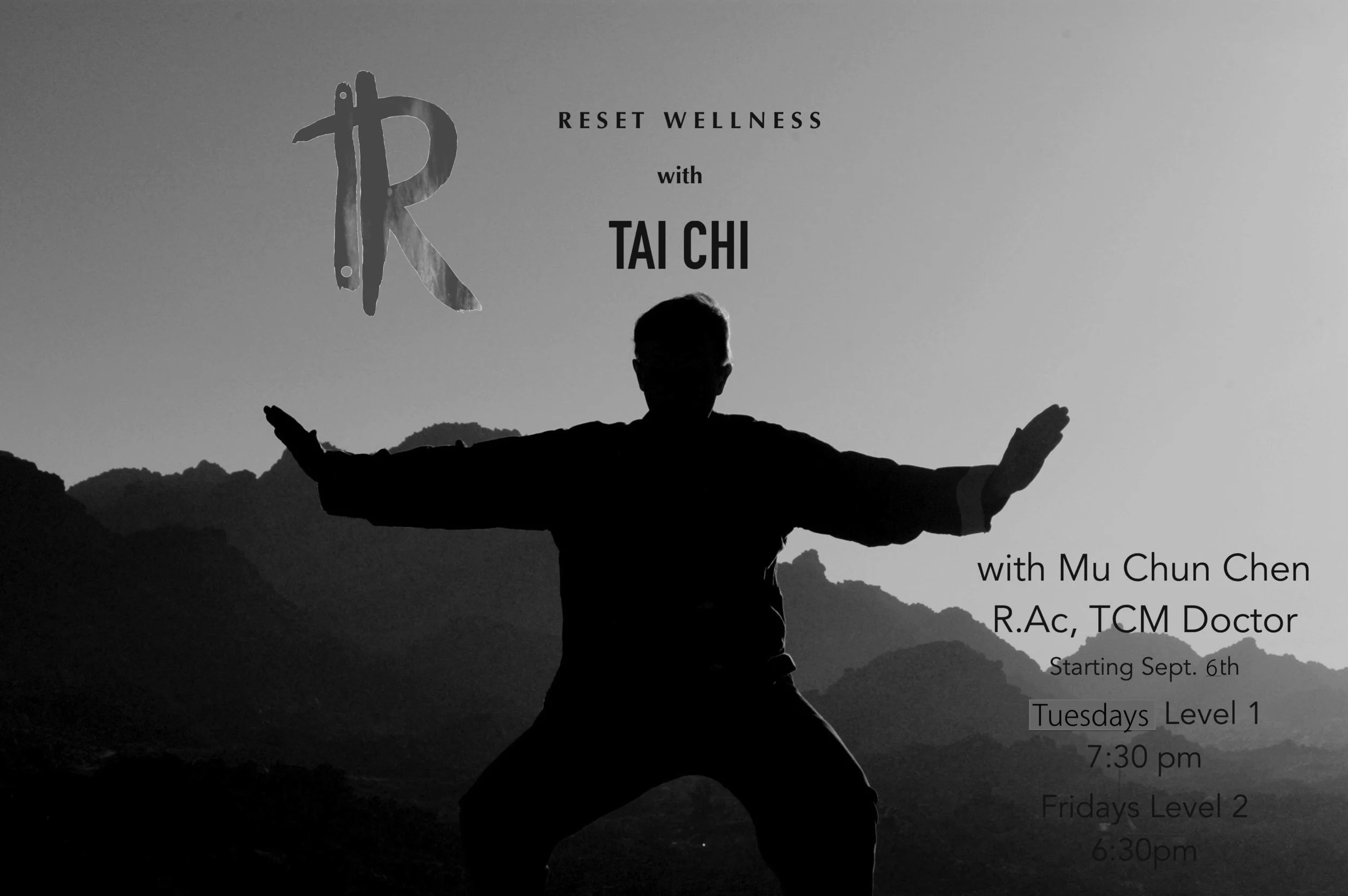
Tai Chi class series at Reset Wellness, Level 1 & 2  register online
 

Yoga for anxiety and depression.

Studies suggest that this practice modulates the stress response.

Since the 1970s, meditation and other stress-reduction techniques have been studied as possible treatments for depression and anxiety. One such practice, yoga, has received less attention in the medical literature, though it has become increasingly popular in recent decades. One national survey estimated, for example, that about 7.5% of U.S. adults had tried yoga at least once, and that nearly 4% practiced yoga in the previous year.

Yoga classes can vary from gentle and accommodating to strenuous and challenging; the choice of style tends to be based on physical ability and personal preference. Hatha yoga, the most common type of yoga practiced in the United States, combines three elements: physical poses, called asanas; controlled breathing practiced in conjunction with asanas; and a short period of deep relaxation or meditation.

Many of the studies evaluating yoga's therapeutic benefits have been small and poorly designed. However, a 2004 analysis found that, in recent decades, an increasing number have been randomized controlled trials — the most rigorous standard for proving efficacy.

Available reviews of a wide range of yoga practices suggest they can reduce the impact of exaggerated stress responses and may be helpful for both anxiety and depression. In this respect, yoga functions like other self-soothing techniques, such as meditation, relaxation, exercise, or even socializing with friends.

Taming the stress response

By reducing perceived stress and anxiety, yoga appears to modulate stress response systems. This, in turn, decreases physiological arousal — for example, reducing the heart rate, lowering blood pressure, and easing respiration. There is also evidence that yoga practices help increase heart rate variability, an indicator of the body's ability to respond to stress more flexibly.

A small but intriguing study further characterizes the effect of yoga on the stress response. In 2008, researchers at the University of Utah presented preliminary results from a study of varied participants' responses to pain. They note that people who have a poorly regulated response to stress are also more sensitive to pain. Their subjects were 12 experienced yoga practitioners, 14 people with fibromyalgia (a condition many researchers consider a stress-related illness that is characterized by hypersensitivity to pain), and 16 healthy volunteers.

When the three groups were subjected to more or less painful thumbnail pressure, the participants with fibromyalgia — as expected — perceived pain at lower pressure levels compared with the other subjects. Functional MRIs showed they also had the greatest activity in areas of the brain associated with the pain response. In contrast, the yoga practitioners had the highest pain tolerance and lowest pain-related brain activity during the MRI. The study underscores the value of techniques, such as yoga, that can help a person regulate their stress and, therefore, pain responses.

Improved mood and functioning

Questions remain about exactly how yoga works to improve mood, but preliminary evidence suggests its benefit is similar to that of exercise and relaxation techniques.

In a German study published in 2005, 24 women who described themselves as "emotionally distressed" took two 90-minute yoga classes a week for three months. Women in a control group maintained their normal activities and were asked not to begin an exercise or stress-reduction program during the study period.

Though not formally diagnosed with depression, all participants had experienced emotional distress for at least half of the previous 90 days. They were also one standard deviation above the population norm in scores for perceived stress (measured by the Cohen Perceived Stress Scale), anxiety (measured using the Spielberger State-Trait Anxiety Inventory), and depression (scored with the Profile of Mood States and the Center for Epidemiological Studies Depression Scale, or CES-D).

At the end of three months, women in the yoga group reported improvements in perceived stress, depression, anxiety, energy, fatigue, and well-being. Depression scores improved by 50%, anxiety scores by 30%, and overall well-being scores by 65%. Initial complaints of headaches, back pain, and poor sleep quality also resolved much more often in the yoga group than in the control group.

One uncontrolled, descriptive 2005 study examined the effects of a single yoga class for inpatients at a New Hampshire psychiatric hospital. The 113 participants included patients with bipolar disorder, major depression, and schizophrenia. After the class, average levels of tension, anxiety, depression, anger, hostility, and fatigue dropped significantly, as measured by the Profile of Mood States, a standard 65-item questionnaire that participants answered on their own before and after the class. Patients who chose to participate in additional classes experienced similar short-term positive effects.

Further controlled trials of yoga practice have demonstrated improvements in mood and quality of life for the elderly, people caring for patients with dementia, breast cancer survivors, and patients with epilepsy.

Benefits of controlled breathing

A type of controlled breathing with roots in traditional yoga shows promise in providing relief for depression. The program, called Sudarshan Kriya yoga (SKY), involves several types of cyclical breathing patterns, ranging from slow and calming to rapid and stimulating.

One study compared 30 minutes of SKY breathing, done six days a week, to bilateral electroconvulsive therapy and the tricyclic antidepressant imipramine in 45 people hospitalized for depression. After four weeks of treatment, 93% of those receiving electroconvulsive therapy, 73% of those taking imipramine, and 67% of those using the breathing technique had achieved remission.

Another study examined the effects of SKY on depressive symptoms in 60 alcohol-dependent men. After a week of a standard detoxification program at a mental health center in Bangalore, India, participants were randomly assigned to two weeks of SKY or a standard alcoholism treatment control. After the full three weeks, scores on a standard depression inventory dropped 75% in the SKY group, as compared with 60% in the standard treatment group. Levels of two stress hormones, cortisol and corticotropin, also dropped in the SKY group, but not in the control group. The authors suggest that SKY might be a beneficial treatment for depression in the early stages of recovery from alcoholism.

Potential help for PTSD

Since evidence suggests that yoga can tone down maladaptive nervous system arousal, researchers are exploring whether or not yoga can be a helpful practice for patients with post-traumatic stress disorder (PTSD).

One randomized controlled study examined the effects of yoga and a breathing program in disabled Australian Vietnam veterans diagnosed with severe PTSD. The veterans were heavy daily drinkers, and all were taking at least one antidepressant. The five-day course included breathing techniques (see above), yoga asanas, education about stress reduction, and guided meditation. Participants were evaluated at the beginning of the study using the Clinician Administered PTSD Scale (CAPS), which ranks symptom severity on an 80-point scale.

Six weeks after the study began, the yoga and breathing group had dropped their CAPS scores from averages of 57 (moderate to severe symptoms) to 42 (mild to moderate). These improvements persisted at a six-month follow-up. The control group, consisting of veterans on a waiting list, showed no improvement.

About 20% of war veterans who served in Afghanistan or Iraq suffer from PTSD, according to one estimate. Experts treating this population suggest that yoga can be a useful addition to the treatment program.

Researchers at the Walter Reed Army Medical Center in Washington, D.C., are offering a yogic method of deep relaxation to veterans returning from combat in Iraq and Afghanistan. Dr. Kristie Gore, a psychologist at Walter Reed, says the military hopes that yoga-based treatments will be more acceptable to the soldiers and less stigmatizing than traditional psychotherapy. The center now uses yoga and yogic relaxation in post-deployment PTSD awareness courses, and plans to conduct a controlled trial of their effectiveness in the future.

Cautions and encouragement

Although many forms of yoga practice are safe, some are strenuous and may not be appropriate for everyone. In particular, elderly patients or those with mobility problems may want to check first with a clinician before choosing yoga as a treatment option.

But for many patients dealing with depression, anxiety, or stress, yoga may be a very appealing way to better manage symptoms. Indeed, the scientific study of yoga demonstrates that mental and physical health are not just closely allied, but are essentially equivalent. The evidence is growing that yoga practice is a relatively low-risk, high-yield approach to improving overall health.

This article originally appeared on www.health.harvard.edu


For more information about yoga for mental wellness, visit our website.
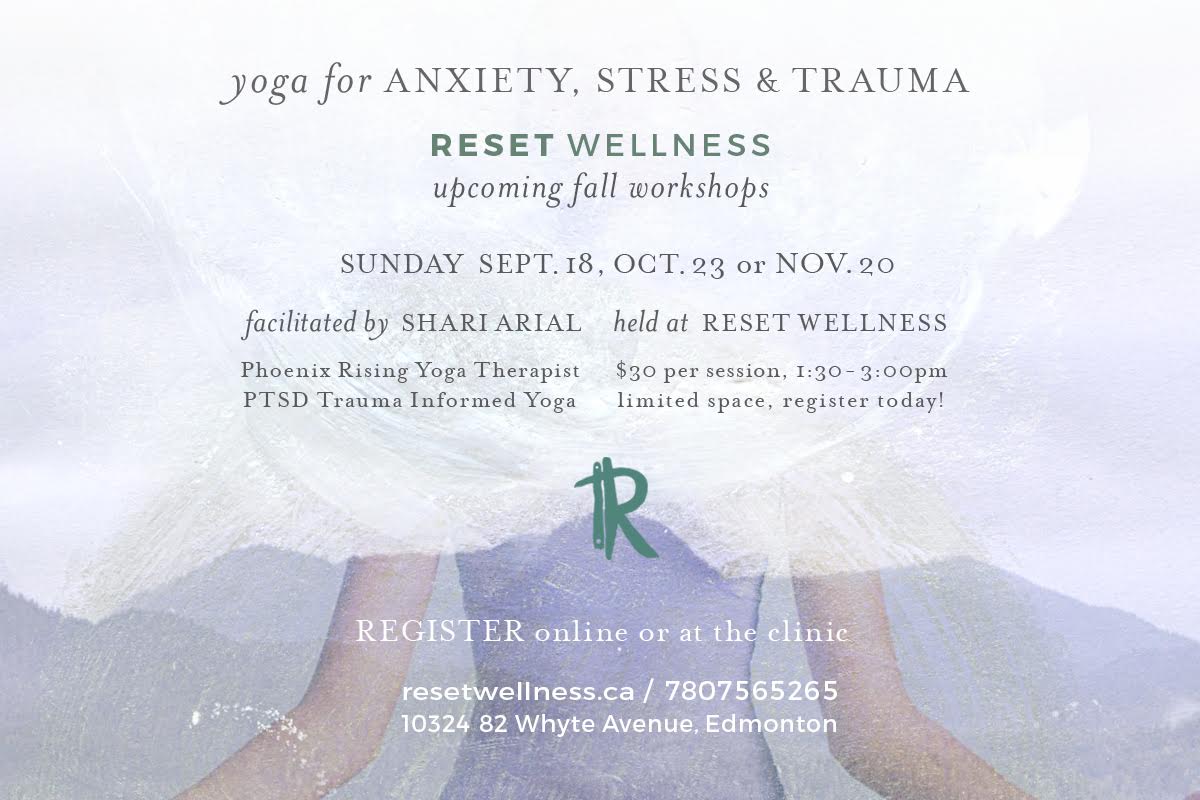
Upcoming yoga workshop for Anxiety, Stress & Trauma register online.
 

Stress: getting a handle on it.

Stress is something everyone knows about, but not everyone understands its effects.

When the body experiences emotional or physical stress it responds by increasing muscle tone and changing hormone levels. When a stressful situation is resolved your body returns back to its previous relaxed state. This suited us really well back in our hunter-gatherer days when we picked berries and had to run from the occasional tiger, or the like. While tigers aren't really a problem these days, you can't out run work or use fire to fend off that report that's due on Monday. Stress tends to occur over long term and doesn't necessarily have a single cause.

Your body treats these so-called minor hassles as threats. As a result you may feel as if you're constantly under assault.

Over time stress can decrease the power of your immune system and almost all your body's processes, increasing the demand for more resources to maintain it. Stress stays with us as we continue to endure it, and becomes stored as muscular & fascial tension, plus heightened levels of hormones, including cortisol and adrenaline, until something happens to ease the perceived stress. Over time this chronic tension and increased hormone levels can cause:

  • Anxiety
  • Depression
  • Digestive problems
  • Headaches
  • Heart disease
  • Sleep problems
  • Weight gain
  • Memory and concentration impairment

It is important to have an outlet for your stress and allow it to be released from your body. There are two ways to release it: one is through physical means - like massage, martial arts,  yoga, or practicing a healthy eating lifestyle, as these activities release the stored muscle tension, strengthen your body and signal the nervous system to relax. Massage especially helps lower blood pressure, increases circulation, stimulates the release of oxytocin and promotes a sense of relaxation. The other is to ease the emotional or mental factors behind the stress through methods like meditation or making the time to relax. Some simple and effective strategies are:

  • Learn to meditate 5 mins a day*
  • Spend time in nature
  • Go for a daily walk
  • Exercise regularly
  • Connect with trusted people
  • Practice your hobbies weekly

*Meditation takes you to a deeper state than sleep. During this time, just like during the sleep cycle, your body has the opportunity to repair and regenerate. Your muscles start to relax and aches are relieved. The result is increased energy and improved health.

 Take time for yourself and find the outlet for you. You'll be glad you did.
 

Everyone endures stress - some form of it - so remember you are not alone. How you cope with it can vary, and every method works, but some more than others for each individual. To learn more and for appointments with our specialists contact us over email contact@resetwellness.ca or phone 780.756.5265We're here to help.

This article is written by our very own Brad Ballard, RMT at Reset Wellness.

PTSD: Symptoms, Self-Help and Treatment


Overcoming PTSD and Moving On with Your Life

Threatening, deeply hurtful, or very upsetting experiences that leave you feeling helpless and hopeless will trigger a fight, flight, or freeze response, which is your nervous system's reaction to danger. Normally, you recover in a few days or weeks, but when you don't, you may be suffering from PTSD. Painful and disabling as it may be, PTSD is a stress response amenable to change. You can begin doing things to alleviate your PTSD symptoms and take back control of your life.

What is PTSD?

Post-traumatic stress disorder (PTSD) can develop following a event that threatens—or appears to threaten—your safety. Most people associate PTSD with rape and battle-scarred soldiers—and military combat is the most common cause in men—but any event (or series of events) that overwhelms you with feelings of hopelessness and helplessness can trigger PTSD, especially if the event feels unpredictable and uncontrollable.

PTSD can affect people who personally experience a threatening event, those who witness the event, or those who pick up the pieces afterwards, such as emergency workers. PTSD can also result from surgery performed on children so young they don't understand what's happening to them, or an event that leaves you emotionally shattered.

Traumatic events that can cause PTSD include:

  • War
  • Natural disasters
  • Car or plane crashes
  • Terrorist attacks
  • Sudden death of a loved one
  • Rape
  • Kidnapping
  • Assault
  • Sexual or physical abuse
  • Childhood neglect
     

PTSD symptoms: Everyone is different

PTSD develops differently from person to person because everyone's nervous system and tolerance for stress is a little different. While the symptoms of PTSD most commonly develop in the hours or days following the traumatic event, it can sometimes take weeks, months, or even years before they appear. There are three main types of symptoms:

Re-experiencing the traumatic event. This may include upsetting memories, flashbacks, and nightmares, as well as feelings of distress or intense physical reactions when reminded of the event (sweating, pounding heart, nausea, for example).

Avoiding reminders of the trauma. You may try to avoid activities, places or thoughts that remind you of the trauma or be unable to remember important aspects of the event. You may feel detached from others and emotionally numb, or lose interest in activities and life in general, sensing only a limited future for yourself. 

Increased anxiety and emotional arousal. These symptoms include trouble sleeping, irritability or outbursts of anger, difficulty concentrating, feeling jumpy and easily startled, and hypervigilance (on constant “red alert”).

Other common symptoms of post-traumatic stress disorder (PTSD)

  • Guilt, shame, or self-blame
  • Substance abuse
  • Feelings of mistrust and betrayal
  • Depression and hopelessness
  • Suicidal thoughts and feelings
  • Physical aches and pains

Symptoms of PTSD in children

In children—especially very young children—the symptoms of PTSD can be different from adults and may include:

  • Fear of being separated from parent
  • Losing previously-acquired skills (such as toilet training)
  • Sleep problems and nightmares
  • Somber, compulsive play in which themes or aspects of the trauma are repeated
  • New phobias and anxieties that seem unrelated to the trauma (such as a fear of monsters)
  • Acting out the trauma through play, stories, or drawings
  • Aches and pains with no apparent cause
  • Irritability and aggression
     

PTSD symptoms: How PTSD affects your nervous system

When your sense of safety is shattered by a traumatic event, it’s normal to have bad dreams, feel fearful, and find it difficult to stop thinking about what happened. For most people, these symptoms gradually lift over time. But this normal response to trauma becomes PTSD when the symptoms don’t ease up and your nervous system gets "stuck." 

Your nervous system has two automatic or reflexive ways of responding to highly stressful events:

  • Mobilization, or fight-or-flight, occurs when social engagement isn’t appropriate and you need to defend yourself or escape the danger of a traumatic event. The heart pounds faster, blood pressure rises, and muscles tighten, increasing your strength and reaction speed. Once the danger has passed, the nervous system calms your body, lowering heart rate and blood pressure, and winding back down to its normal balance.
  • Immobilization occurs when you’ve experienced an overwhelming amount of stress in a situation and, while the immediate danger has passed, you find yourself “stuck.” Your nervous system is unable to return to its normal state of balance and you’re unable to move on from the event. This is PTSD.
     

PTSD self-help tip 1: Get moving

As well as releasing endorphins and making you feel better, by really focusing on your body and how it feels as you move, exercise can help your nervous system become “unstuck”.

  • Any rhythmic exercise that engages both your arms and legs—such as walking, running, swimming, or dancing—works well if instead of focusing on your thoughts, you focus on how your body feels.
  • Notice the sensation of your feet hitting the ground, for example, or the rhythm of your breathing, or the feeling of the wind on your skin.
  • Rock climbing, boxing, weight training, or martial arts can make it easier to focus on your body movements—after all, if you don’t, you could get hurt.
  • Aim to exercise for 30 minutes or more each day—or if it’s easier, three 10-minute spurts of exercise.

Spend time in nature

Pursuing outdoor activities like hiking, camping, mountain biking, rock climbing, whitewater rafting, and skiing helps veterans cope with PTSD symptoms and transition back into civilian life. Anyone with PTSD can benefit from the relaxation, seclusion, and peace that come with being out in nature. Seek out local organizations that offer outdoor recreation or teambuilding opportunities.
 

PTSD self-help tip 2: Self-regulate your nervous system

Learning that you can change your arousal system and calm yourself can directly challenge the sense of helplessness that is a common symptom of PTSD.

  • Mindful breathing is a quick way to calm yourself. Simply take 60 breaths, focusing your attention on each out breath.
  • Sensory input. Just as specific sights, noises, or smells can instantly transport you back to the traumatic event, so too can sensory input quickly calm you down. The key is to find the sensory input that works for you. Does listening to an uplifting song make you feel calm? Or smelling ground coffee or a certain brand of cologne? Or maybe petting an animal works quickly to make you feel at ease? Everyone responds to sensory input a little differently, so experiment to find what works best for you.
  • Reconnect emotionally. Reconnecting to uncomfortable emotions without becoming overwhelmed can make a huge difference in your ability to manage stress, balance your moods, and take back control of your life. See our Emotional Intelligence Toolkit.
     

PTSD self-help tip 3: Connect with others

Once the fight or flight reflex has been triggered, face-to-face connection with people who make you feel safe and valued is the quickest, most effective way of bringing your nervous system back into balance. The kind and caring support of others can be vital to your recovery. Look for people you can talk to for an uninterrupted period of time, someone who will listen to you without judging, criticizing, or continually being distracted. That person may be your significant other, a family member, a friend, or professional therapist.

If connecting is difficult

No matter how close you are to the person or how helpful they try to be, the symptoms of PTSD that leave your nervous system feeling “stuck” can also make it difficult to connect to others. If you still don’t feel any better after talking, there are ways to help the process along.

  • Exercise or move. Before chatting with a friend, either exercise or move around. Jump up and down, swing your arms and legs, or just flail around. Your head will feel clearer and you’ll find it easier to connect.
  • Vocal toning. As strange as it sounds, vocal toning is a great way to open up your nervous system to social engagement—even if you can’t sing or consider yourself tone-deaf. Sit up straight and with your lips together and teeth slightly apart, simply make “mmmm” sounds. Change the pitch and volume until you experience a pleasant vibration in your face. Practice for a few minutes and notice if the vibration spreads to your heart and stomach.
  • Volunteering your time or reaching out to a friend in need is not only a great way to connect to others but can also help you reclaim your sense of power. Joining a PTSD support group can help you feel less isolated and alone and also provide invaluable information on how to cope with symptoms and work towards recovery.
     

PTSD self-help tip 4: Take care of yourself

The symptoms of PTSD can be hard on your body so it’s important to take care of yourself and develop some healthy lifestyle habits.

  • Take time to relax. Relaxation techniques such as meditation, deep breathing, massage, or yoga can activate the body’s relaxation response and ease symptoms of PTSD.
  • Avoid alcohol and drugs. When you’re struggling with difficult emotions and traumatic memories, you may be tempted to self-medicate with alcohol or drugs. But substance use worsens many symptoms of PTSD, interferes with treatment, and can add to problems in your relationships.
  • Eat a healthy diet. Start your day right with breakfast, and keep your energy up and your mind clear with balanced, nutritious meals throughout the day. Omega-3s play a vital role in emotional health so incorporate foods such as fatty fish, flaxseed, and walnuts into your diet. Limit processed food, fried food, refined starches, and sugars, which can exacerbate mood swings and energy fluctuations.
  • Get enough sleep. Sleep deprivation exacerbates anger, irritability, and moodiness. Aim for somewhere between 7 to 9 hours of sleep each night. Develop a relaxing bedtime ritual (listen to calming music, watch a funny show, or read something light) and make your bedroom as quiet, dark, and soothing as possible.
     

Helping a loved one with PTSD

When a loved one has PTSD, it takes a heavy toll on your relationship and family life. You may have to take on a bigger share of household tasks, deal with the frustration of a loved one who won’t open up, or even deal with anger or disturbing behavior.  The symptoms of PTSD can also result in job loss, substance abuse, and other stressful problems.

  • Don’t pressure your loved one into talking. It is often very difficult for people with PTSD to talk about their trauma. For some, it can even make things worse. Never try to force your loved one to open up. Comfort often comes from your companionship and acceptance, rather than from talking.
  • Let your loved one take the lead, rather than telling him or her what to do. Take cues from your loved one as to how you can best provide support and companionship—that may involve talking about the traumatic event over and over again, or it may involve simply hanging out together.
  • Manage your own stress. The more calm, relaxed, and focused you are, the better you’ll be able to help a loved one with PTSD.
  • Try to prepare for PTSD triggers. Common triggers include anniversary dates; people or places associated with the trauma; and certain sights, sounds, or smells. If you are aware of the triggers that may cause an upsetting reaction, you’ll be in a better position to help your loved one calm down.
  • Don’t take the symptoms of PTSD personally. If your loved one seems distant, irritable, angry, or closed off, remember that this may not have anything to do with you or your relationship.
  • Educate yourself about PTSD. The more you know about the symptoms, effects, and treatment, the better equipped you'll be to help your loved one, understand what he or she is going through, and keep things in perspective.
  • Take care of yourself. Letting your family member’s PTSD dominate your life while ignoring your own needs is a surefire recipe for burnout. You need to take care of yourself in order to take care of your loved one.
     

Professional treatment for PTSD

Treatment for PTSD relieves symptoms by helping you deal with the trauma you’ve experienced. A doctor or therapist will encourage you to recall and process the emotions you felt during the original event in order to reduce the powerful hold the memory has on your life.

You’ll also:

  • Explore your thoughts and feelings about the trauma
  • Work through feelings of guilt and mistrust
  • Learn how to cope with intrusive memories
  • Address problems PTSD has caused in your life and relationships

Types of treatment for post-traumatic stress disorder (PTSD)

  • Trauma-focused cognitive-behavioral therapy involves gradually "exposing" yourself to feelings and situations that remind you of the trauma, and replacing distorted and irrational thoughts about the trauma with more balanced picture.
  • Family therapy can help your loved ones understand what you’re going through and help the family work through relationship problems.
  • Medication is sometimes prescribed to people with PTSD to relieve secondary symptoms of depression or anxiety, although they do not treat the causes of PTSD.
  • EMDR (Eye Movement Desensitization and Reprocessing) incorporates elements of cognitive-behavioral therapy with eye movements or other forms of rhythmic, left-right stimulation, such as hand taps or sounds. These work by "unfreezing" the brain’s information processing system, which is interrupted in times of extreme stress.
     

Finding a therapist for PTSD treatment

When looking for a therapist, seek out mental health professionals who specialize in the treatment of trauma and PTSD. You can ask your doctor or other trauma survivors for a referral, call a local mental health clinic, psychiatric hospital, or counseling center, or see the Resources and References section below.

  • Choose a PTSD therapist who makes you feel comfortable and safe.
  • If a therapist doesn’t feel right, look for someone else. For therapy to work, you need to feel understood.

    This article originally appeared on helpguide.org and was written by Melinda Smith, M.A., Lawrence Robinson, and Jeanne Segal, Ph.D.

YOGA for Anxiety, Stress & Trauma Workshops offered monthly at Reset Wellness.
For more information see our class listing on our website.